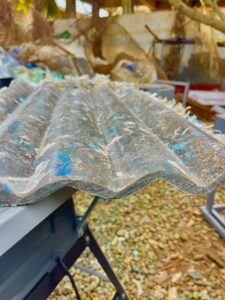
In a bold step toward redefining sustainable infrastructure in Africa, Ghanaian social innovator and environmentalist Makafui Awuku has announced an ambitious initiative to construct model schools using roofing sheets and desks made entirely from recycled pure water sachets.
The project, envisioned under the banner of Mckingtorch Africa, aims to tackle plastic pollution while advancing the United Nations Sustainable Development Goal 11—Sustainable Cities and Communities. Awuku believes the time to act is now.
“Imagine we build model schools with desks made from the recycled pure water sachets, and then the roofing sheets of the building are also made from the recycled pure water sachet waste,” he wrote in a recent post. “This is the future—but the future is now.”
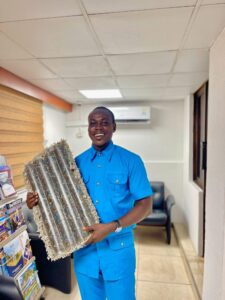
Awuku’s approach merges environmental activism with grassroots innovation. For years, he has led initiatives to repurpose Ghana’s plastic waste into usable materials, and this latest venture underscores his commitment to transforming what many consider trash into tools for development.
The concept isn’t just theoretical. His organization has already pioneered eco-friendly furniture and plastic-based construction materials through community recycling hubs. By scaling up to entire school structures, Awuku hopes to demonstrate that circular economy solutions are viable and impactful—even in education infrastructure.
Calling on fellow innovators, investors, and changemakers, Awuku invited early adopters to collaborate and co-create projects that align with this vision.“If you are an early adopter, this is for you,” he urged. “Come up with a project, add money to it, and let’s go on an exciting journey.”
This model of community-powered sustainability offers a replicable blueprint for cities across Africa. As urban populations grow and plastic waste surges, initiatives like these offer a hopeful and practical pathway to resilient, eco-conscious development.
For Awuku and Mckingtorch Africa, this isn’t just about recycling—it’s about rewriting Africa’s narrative through innovation, self-reliance, and climate action.