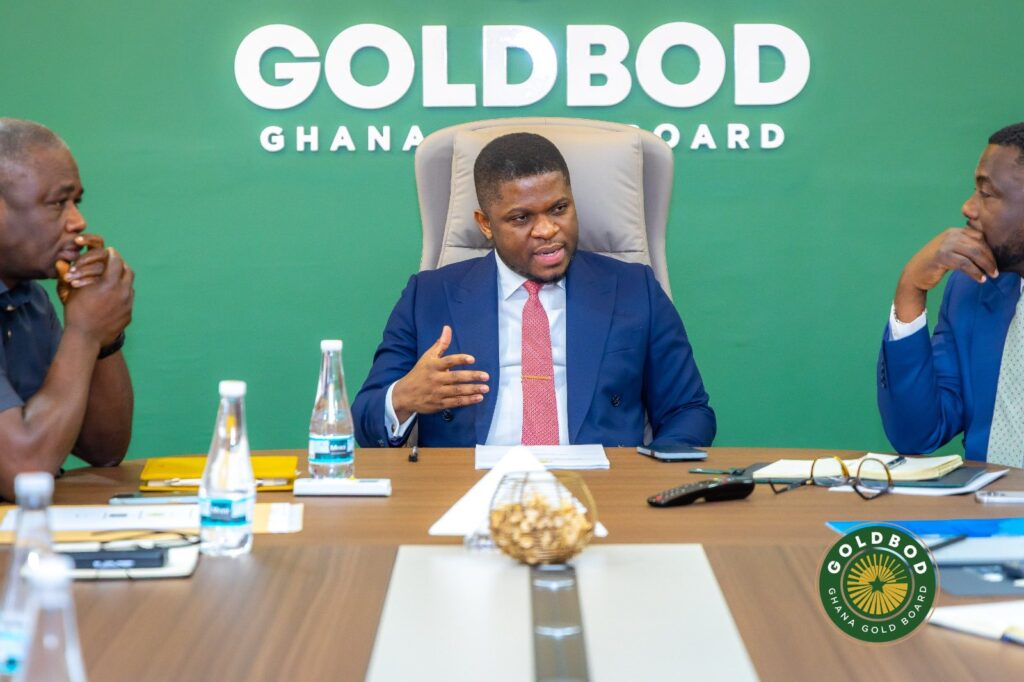
Sammy Gyamfi, GoldBod CEO
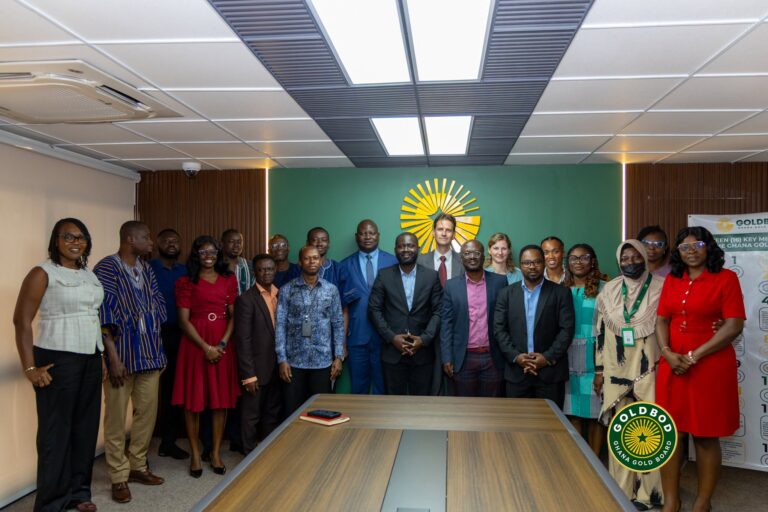
The Ghana Gold Board (GoldBod) has rejected claims circulating in the media suggesting it is responsible for losses under the Bank of Ghana’s Gold-for-Reserves programme, insisting that the institution has recorded significant profits in 2025.
In a detailed clarification, GoldBod stated that it has not made any losses since commencing operations. Rather, unaudited financial statements published on its website indicate that the Board is on course to declare an income surplus of not less than GH¢600 million for the 2025 financial year.
GoldBod explained that its role in 2025 has been limited to the local purchasing, assaying and export of gold on behalf of the Bank of Ghana (BoG). The actual trading and sale of gold to off-takers, it stressed, falls exclusively under the mandate of the central bank.
“The GoldBod is not aware of any loss of US$214 million incurred by the Bank of Ghana under the Gold-for-Reserves programme on account of so-called ‘GoldBod offtaker fees’,” the statement said, adding that the financial statements of the BoG’s Gold-for-Reserves and Gold-for-Forex programmes for 2025 are yet to be audited.
GoldBod further dismissed claims that it charges “offtaker fees” under the artisanal and small-scale mining (ASM) gold trading programme, describing such assertions as incorrect. According to the Board, GoldBod does not deal with off-takers at all, and all off-take agreements—including discounts covering freight, insurance and refining—are negotiated and implemented solely by the Bank of Ghana.
The only charges GoldBod receives from the BoG, it clarified, are a statutory Assay Fee of 0.25 percent and a Service Charge of 0.5 percent, both of which were inherited from a 2023 Gold Purchase Agreement between the BoG and the defunct Precious Minerals Marketing Company (PMMC). These fees, GoldBod emphasised, have not been increased in 2025, while commissions paid to licensed gold buyers are borne by the BoG.
Highlighting its macroeconomic impact, GoldBod disclosed that it has generated over US$10 billion in foreign exchange in 2025 alone, having purchased more than 100 tonnes of ASM gold for the Bank of Ghana. In addition, the Board purchases 20 percent of the output of nine large-scale mining companies to support the country’s gold reserves.
These inflows, together with other measures, have contributed to a historic rise in Ghana’s foreign reserves, which increased from about US$9 billion in 2016 to roughly US$12 billion in 2025. As a result, the Ghana cedi has appreciated by more than 35 percent against the US dollar year-to-date, marking the first sustained appreciation since 2007.
GoldBod said the stronger currency has helped reduce debt obligations, keep inflation in single digits and lower the overall cost of living, with positive spillovers across the economy.
The Board noted that it is barely eight months old and has so far operated largely as an agent of the Bank of Ghana. From January 2026, however, GoldBod will fully take over the ASM gold trading programme, assuming responsibility for the purchase, trading and sale of gold without any fee obligations to the BoG.
Under the new arrangement, GoldBod said it will deploy its government-allocated revolving seed trade capital to deliver sustainable returns for the state, adding that concerns about the impact of its fees on the BoG’s accounts will become obsolete from 2026.