Emmanuel Armah-Kofi Buah
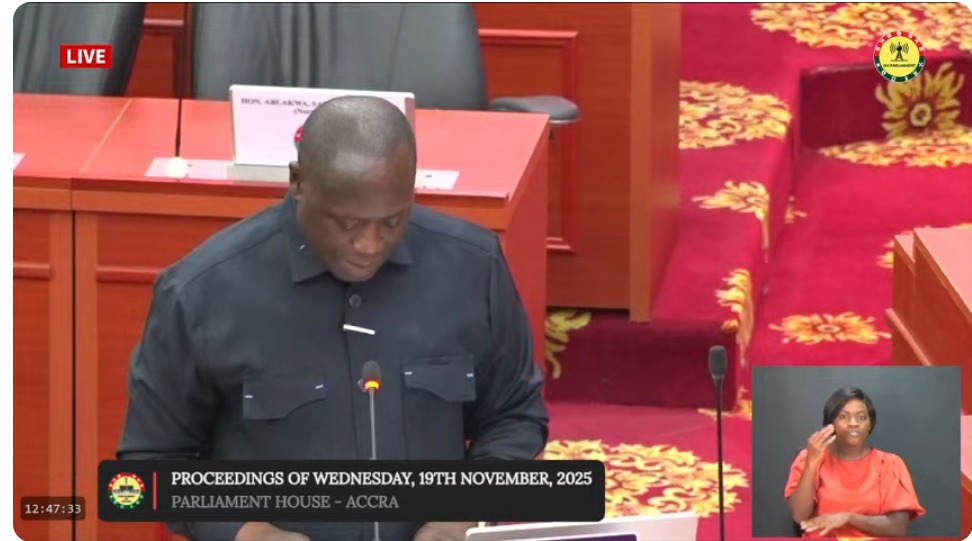
The Minister for Lands and Natural Resources, Emmanuel Armah-Kofi Buah on Wednesday, 19 November, briefed Parliament on comprehensive measures being implemented to support small-scale miners in the Tarkwa-Nsuaem municipality to transition to sustainable and legally compliant mining practices.
Responding to a question filed by MP for Tarkwa-Nsuaem, Sheikh Issah Salifu Taylor, the Minister explained that while several licensed small-scale operators in the area are already mining responsibly, illegal activities persist in parts of the municipality, undermining environmental protection efforts.
The Minister identified communities such as Dompem, Simpa, Nsuaem, Bonsawire, and others as hot-spots for irresponsible mining, despite ongoing engagement and supervision by the Minerals Commission.
He said the government is adopting a multi-pronged approach to address the situation and promote more sustainable practices.
According to him, the Minerals Commission has streamlined the licensing and permitting regime to shorten the time required to secure small-scale mining licenses, thereby encouraging operators to join the formal sector.
He added that the Ministry is strengthening district mining committees and supporting small-scale mining associations to enhance bottom-up participation in the management of mining at the local level.
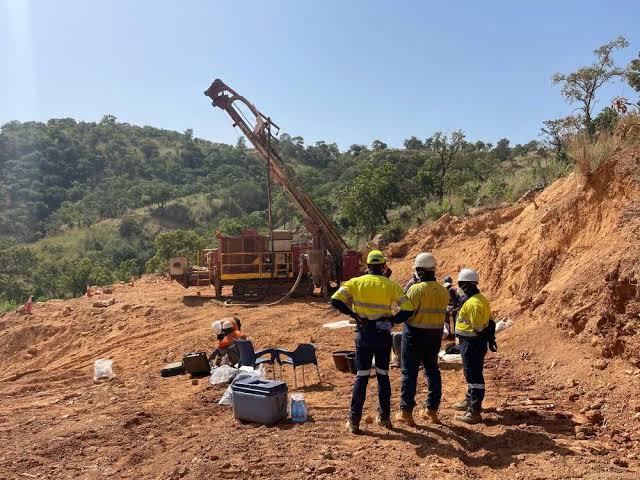
The Minister further disclosed that more block mining areas are being demarcated for small-scale operators, with the Ghana Geological Survey Authority conducting geological investigations to identify suitable sites.
He also highlighted the rollout of community-based cooperative mining schemes under the The Responsible Cooperative Mining and Skills Development Programme (rCOMSDEP) . These schemes aim not only to transition illegal miners into regulated, community-focused ventures but also to create alternative employment opportunities and boost local economies.
To deepen oversight, the Minister said the government is expanding Minerals Commission offices across all major mining districts to ensure decentralised monitoring and quick response to infractions.
Enforcement, he stressed, remains central to the government’s strategy. He revealed that 1,000 Blue Water Guards have been deployed to monitor and clamp down on illegal mining activities along critical river bodies, complementing the work of the National Anti-Illegal Mining Operations Secretariat (NAIMOS).
Continuous training and sensitization programmes are also being undertaken to equip miners with knowledge on environmentally responsible mining technologies, including mercury-free processing methods.
The Minister expressed confidence that the combination of regulatory reforms, decentralised monitoring, community-based initiatives and stronger enforcement would help drive lasting improvements in the Tarkwa-Nsuaem mining zone.
“We believe the initiatives outlined above will facilitate a shift towards sustainable and legally compliant mining practices, fostering environmental stewardship and advancing community development,” he told Parliament.