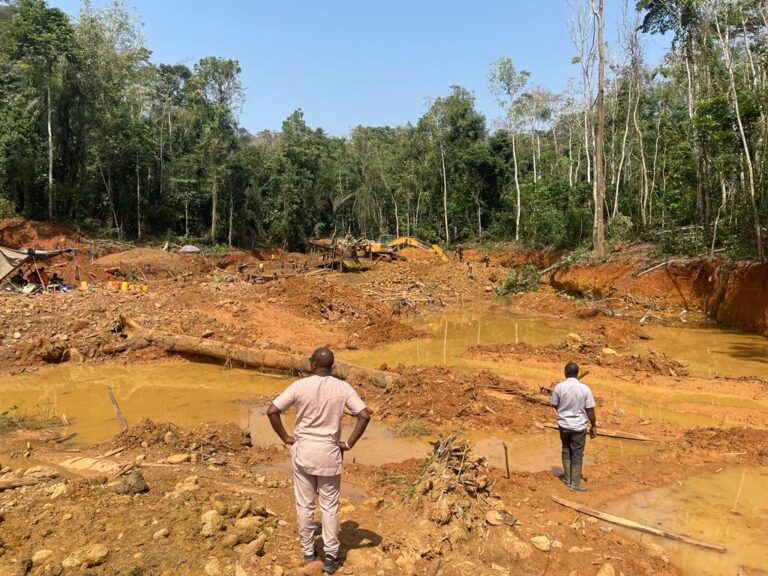
The Concerned Citizens of Atewa Landscape (CCAL) has begun mapping, monitoring and testing lesser-known streams around the Atewa Forest Reserve, amid concerns over the impact of illegal mining on the area’s water resources.
The initiative, being undertaken through CCAL’s Zonal Coordinators Monitoring System (ZOCOMOS), covers 53 communities surrounding the forest reserve and seeks to identify, map and document streams originating from or connected to the Atewa landscape.
CCAL said the project is supported by the Nature’s Heartbeat Project, with funding support from IUCN Netherlands through A Rocha Ghana.
According to the organisation, major rivers such as the Densu, Birim and Ayensu receive considerable attention, while many smaller waterways remain poorly documented despite their importance to communities, agriculture and biodiversity.
CCAL said its work has so far covered 22 of the 53 communities, where 16 streams have been identified. Of these, the organisation said only three have so far been found to be free from significant galamsey impact, while the remaining streams have been affected by illegal mining activities.
The investigation is also assessing the physical condition of the streams and, where feasible, collecting water samples for quality testing to establish evidence of pollution and other changes.
CCAL said the exercise is intended to establish how many streams exist in the Atewa landscape, where they are located, which communities depend on them, their current condition and the extent to which they can still be protected.
With 31 communities yet to be assessed, CCAL said the full picture of the landscape’s lesser-known waterways remains incomplete.
The organisation said the findings will help generate community-level evidence to support efforts to protect Atewa’s water resources from further degradation.