Ghana’s push to become a key player in the global lithium value chain could come at a steep cost, according to a new analysis from the Natural Resource Governance Institute (NRGI).
The report, authored by economic analysts Thomas Scurfield and David Sefa Adjei, warns that the country’s ambition to refine its own lithium domestically—rather than exporting it in raw form—could lead to a loss of up to $500 million in government revenue under current market conditions.
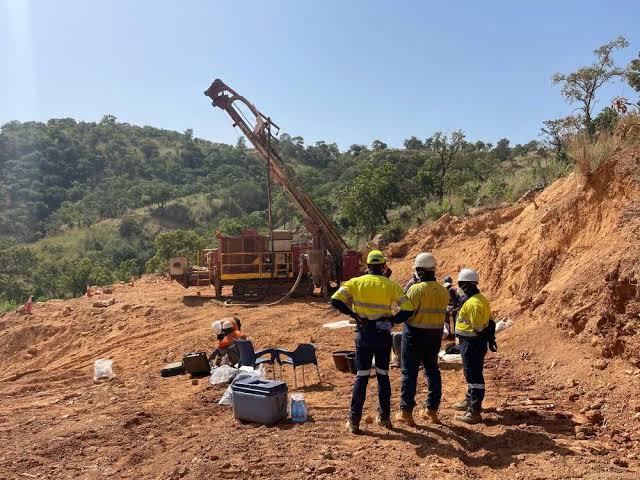
At the heart of the conversation is the Ewoyaa lithium project, operated by Barari DV Ghana Ltd, a subsidiary of Atlantic Lithium. The company plans to start producing lithium spodumene concentrate within two years, pending parliamentary approval of its mining lease. While Barari has already committed to exporting half of Ewoyaa’s production, growing public and political pressure is calling for the remainder to be processed locally.
But the NRGI analysis suggests that such a move could be economically unsound, at least for now. Using a series of market-based models, the report finds that a lithium carbonate refinery in Ghana would be unprofitable if it pays market price for spodumene concentrate. In fact, the refinery would only break even if it could purchase Ghana’s mined concentrate at below-market rates—a move that would significantly reduce the government’s take from royalties, taxes, and dividends.
In a medium-price scenario, Ghana stands to earn half a billion dollars less by refining Ewoyaa’s lithium locally than it would from exporting the raw material.
The report also places Ghana’s ambitions within a challenging global landscape. China currently dominates lithium refining, thanks to its vast technical expertise and lower costs. Global overcapacity in refining, combined with uncertain demand for lithium chemicals outside China, has made it difficult for new players to enter the market successfully.
Even beyond the unfavorable economics, the authors caution that a refinery could deliver limited benefits. At most, it may create 200 direct jobs, while imposing serious environmental burdens—including annual water usage equivalent to that of 90,000 Ghanaians. The broader industrial stimulus remains unclear, and the risks to public finances are significant.
Despite these warnings, the report doesn’t dismiss the idea of lithium refining entirely. Instead, it urges a more strategic and measured approach. The authors advocate for what they call a “mine-and-monitor” strategy: get the Ewoyaa mine into production as soon as possible, encourage further exploration, and closely track global market trends, particularly signals such as a rising premium on non-Chinese lithium carbonate and increased cathode manufacturing capacity outside China.
If the economics of refining shift in Ghana’s favor, the country could revisit the idea under more favorable conditions. Until then, the government is urged to focus on transparency, public engagement, and investor confidence, ensuring that citizens are part of the decision-making process and understand the trade-offs involved.
“This is a time for strategic thinking, not just bold ambition,” the authors conclude. “Rushing into lithium refining under current market conditions could do more harm than good.”