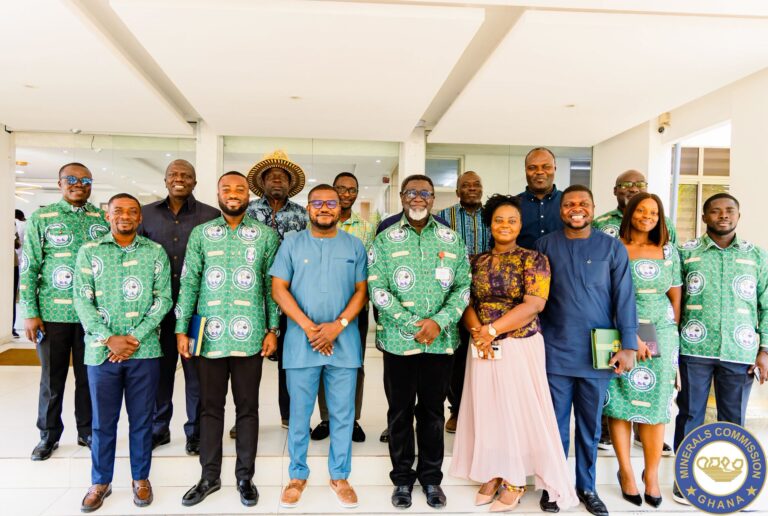
Hannah Owusu-Koranteng(2nd from left)
The Associate Executive Director of Wacam, Hannah Owusu- Koranteng, has emphasized the urgent need to address issues surrounding compulsory land acquisition and Free, Prior, and Informed Consent (FPIC) in Ghana’s extractive sector.
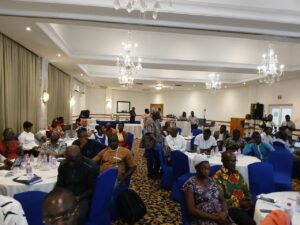
She made the call in an interview with the media at a national-level stakeholder forum on the theme “Rethinking Compulsory Land Acquisition and FPIC in the Extractive Sector: Ensuring Equity, Environmental Sustainability, and Inclusive Development.” on Tuesday (25 March).
A shift from indigenous consent to state coercion
Koranteng highlighted how Ghana has moved from an era where indigenous communities had a say in the use of their lands to a system where the state and corporate entities forcibly acquire lands with little to no compensation.
“In the past, even under colonial administration, there were concessions ensuring that the consent of indigenous landowners was sought before mining activities could take place. Today, however, the state is coercing and manipulating people to take over their lands almost for free,” she said.
She condemned the use of state security agencies, including the police and military, to intimidate communities resisting land grabs. She particularly cited ongoing struggles in the Ahafo region, where residents fighting to protect their lands have been dragged to court.
Legal and policy inconsistencies favouring corporations
Koranteng also pointed out inconsistencies in Ghana’s mining laws and policies. She noted that while Ghana’s mining policy incorporates ECOWAS principles on responsible resource extraction, these principles are not reflected in the actual laws governing mining operations. “These inconsistencies exist to protect the interests of corporate entities rather than citizens,” she stated.
She called on policymakers, including the presidency and cabinet ministers, to prioritize the welfare of local communities over corporate interests. “Corporate entities are already powerful. The state must protect the rights of vulnerable community members,” she added.
The need for urgent reforms
The forum called for stronger legal frameworks to ensure FPIC is respected, adequate compensation for displaced communities, and environmental sustainability in resource extraction. It also emphasized that if these concerns are not addressed, land conflicts, environmental degradation, and human rights abuses will persist, undermining the benefits Ghana derives from its natural resources.
The discussions featured case studies from affected communities in Tano North Municipality (minerals) and the Nzema Area (petroleum), further highlighting the devastating impact of extractive activities on local livelihoods.
The forum, organized by A Rocha Ghana, Wacam, BRACE, CEPIL, Merton and Everett, and Oxfam in Ghana, provided a platform for discussions on the legal, social, and economic impacts of land acquisition policies on local communities.