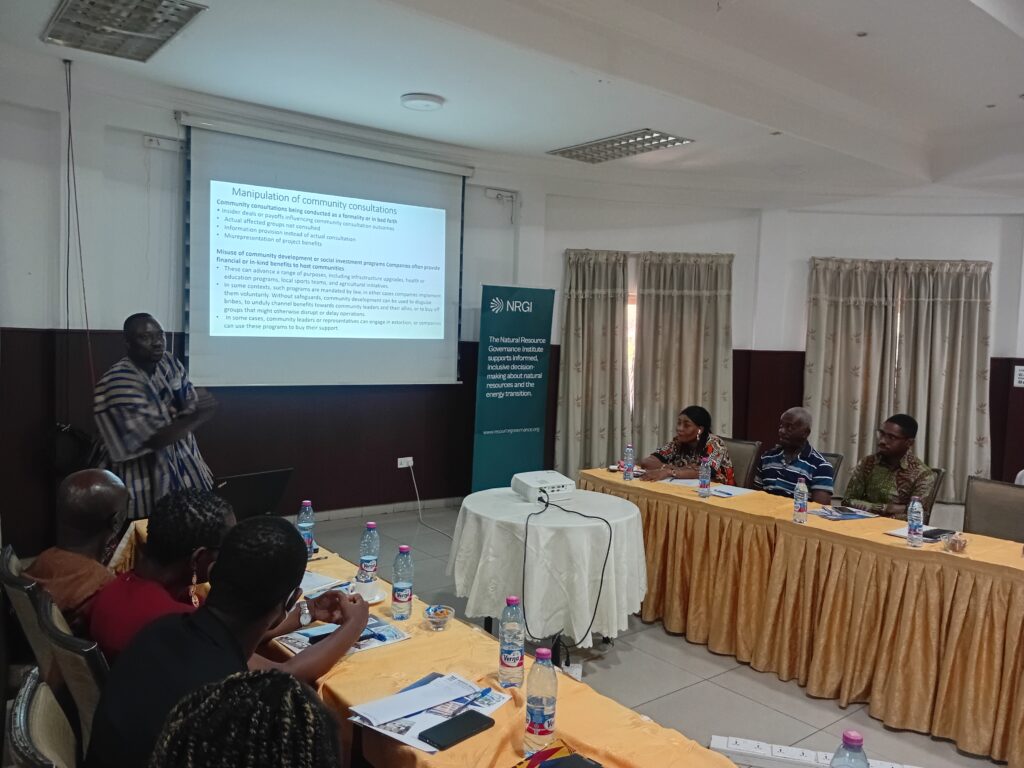
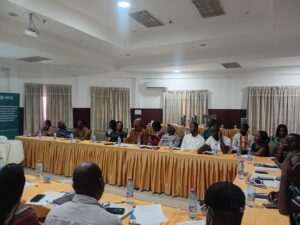
A new initiative aimed at tackling corruption in Ghana’s mining industry has been unveiled as stakeholders gathered in Accra on Friday (28 March) for a validation workshop on Mining Corruption Assessment.
The event, organized by the Natural Resource Governance Institute (NRGI) in collaboration with Help Foundation Africa, presented findings from a corruption risk assessment in the sector and introduced global anti-corruption tools adapted for Ghana’s context.
Speaking at the workshop, Denis Gyeyir, Africa Senior Programme Officer at NRGI, highlighted the rationale behind the initiative, emphasizing the need for robust mechanisms to identify and combat corruption in Ghana’s most economically significant sector.
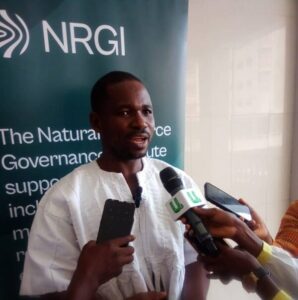
“NRGI has developed two essential corruption assessment and diagnostic tools to help detect, assess, and prevent corruption. These tools, developed at the global level, are designed for use across different countries and jurisdictions. In Ghana, we needed to test them in a sector that significantly impacts the economy, and given the ongoing corruption-related challenges in small-scale mining, the mining sector was the ideal choice,” he explained.
Gyeyir further stressed that corruption thrives in secrecy, making it crucial to empower key stakeholders such as journalists, civil society organizations, community activists, and state anti-corruption agencies with tools to expose and prevent corrupt practices.
He noted that the initiative is not a silver bullet to eradicate corruption but a significant step toward equipping stakeholders to identify risks and advocate for systemic reforms.
“We engaged Help Foundation Africa because of their strong community presence across the country. This initiative aims to shed light on corruption, equip actors with the necessary tools, and develop mechanisms to prevent its occurrence—whether through advocacy, media engagement, or civil society action,” he added.
The programme also provided an opportunity to refine the tools before their broader application. Gyeyir noted that after the validation phase, the tools would be tested with state anti-corruption institutions to assess their effectiveness and determine if revisions are needed. The long-term plan includes expanding the tools’ application to other sectors such as oil and gas and renewable energy.
Expanding the Fight Against Corruption
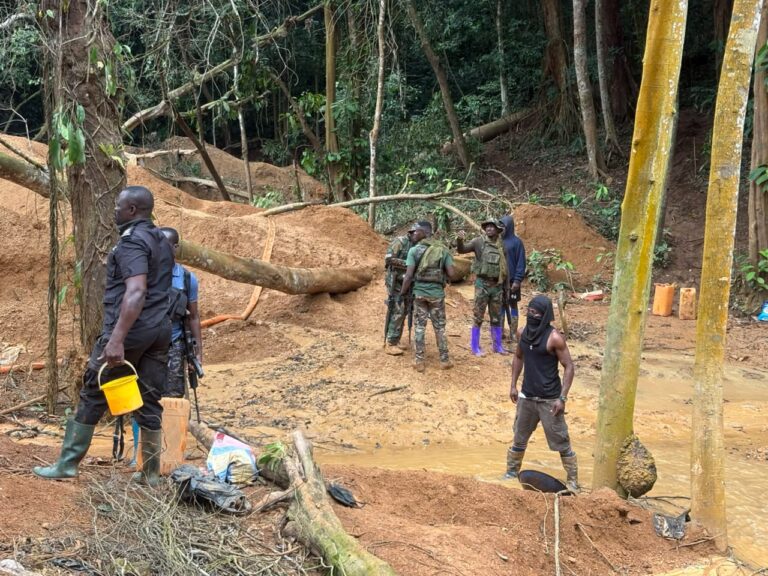
Jacob Tetteh Ahuno, Programmes and Research Officer at the Ghana Integrity Initiative, underscored the urgency of tackling corruption in the extractive sector, particularly given the widespread impact of illegal mining.
“The extractive sector has become one of the most pressing topics in Ghana. Illegal mining is expanding, and its effects are visible everywhere. This tool comes at a crucial time when Ghana is reviewing its Minerals and Mining Act. It presents a great opportunity to identify key corruption risks and push for necessary clauses in the new law that will help curb corruption,” he stated.
Ahuno expressed optimism that the tool’s findings could contribute to legislative reforms that minimize corruption and its devastating effects on Ghana’s mining communities.
As Ghana continues to grapple with illegal mining and corruption in the natural resource sector, stakeholders believe that initiatives like this will play a crucial role in strengthening transparency, accountability, and good governance.