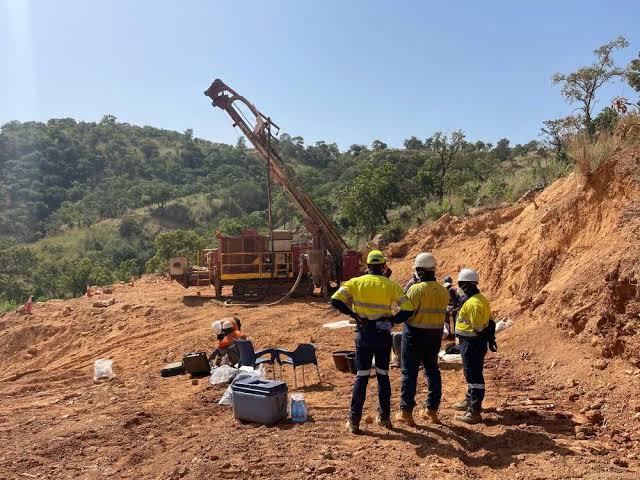
In Talensi, small-scale miners are facing an increasing threat to their livelihoods. With government and political backing, large mining firms are systematically taking over concessions, sidelining miners who have long depended on these lands.
This shift is justified by claims that small-scale miners lack the capacity to extract resources at greater depths.
Dr. Bishop Akologo, executive director of Technology Integration Point Ventures (TIPV), expressed these concerns, reflecting on how the Talensi area—the first region designated for small-scale mining—has been increasingly acquired by larger firms.
“I was sad that Upper East is now, it looks like every inch has been acquired by somebody who wants to mine. The Talensi area, where young people have devoted much of their lives to exploring minerals, has now been overtaken. Over the years, these miners have gained valuable skills, but they have also suffered from illnesses caused by exposure to minerals and pollution. Now, they’re told the mineral is too deep for them to mine and are urged to adopt new mining techniques.”
Rather than being supported to build their capacity, these miners are being left behind, raising serious concerns about the long-term economic future of the Talensi area.
Dr. Akologo stressed that instead of empowering these miners, the pressure on them to sell their concessions for a pittance is growing.
“Politicians are pressuring young miners to sell their concessions, and large mining companies are taking over many of these areas. Instead of helping local miners acquire the technology and capital to expand, we are marginalizing them,” he said. “These foreign companies aren’t going to reinvest their profits here.”
Dr Akologo’s comments were in connection with a study titled “Increasing domestic revenue mobilisation by Promoting Corporate, Natural Resource, and Professional Integrity,” conducted by the Integrated Social Development Centre (ISODEC) in partnership with Global Financial Integrity.
He emphasized the need for greater collaboration within the local community to strengthen its stake in mining operations and ensure that the economic benefits are shared more equally.
“All the so-called elites from this area need to come together, take an interest in the mining sector, and perhaps form partnerships or businesses to interface with those who have the financial resources. The local miners have accumulated valuable knowledge and skills, but they lack the equipment and capital needed to mine in a more environmentally friendly and efficient manner. Those of us with the advantage of education and business experience can help them do better,” he added.
Dr. Akologo also pointed out the crucial role of government in facilitating this process, ensuring that local people and Ghanaians benefit from the resources on their land. “If we don’t wake up and address these issues, others will do it on our behalf,” he warned.
Dr. Akologo recently engaged with journalists in the Upper East Region during a two-day capacity-building workshop organized by the Media Foundation for West Africa (MFWA), funded by Oxfam in Ghana and the Danish Ministry of Foreign Affairs. The workshop aimed to train journalists on issues related to Illicit Financial Flows (IFF).
He highlighted the high vulnerability of the extractive sector to IFFs, citing a 2015 report by the Africa Centre for Energy Policy (ACEP), which estimated that US$702 billion is lost annually in Ghana’s extractive sector due to IFFs.
In 2022, ACEP again reported that Africa lost around US$40 billion to IFFs in the extractive commodities sector. Dr. Akologo stressed the need for urgent attention to this issue.
Reporting by Mark Smith in the Upper East Region