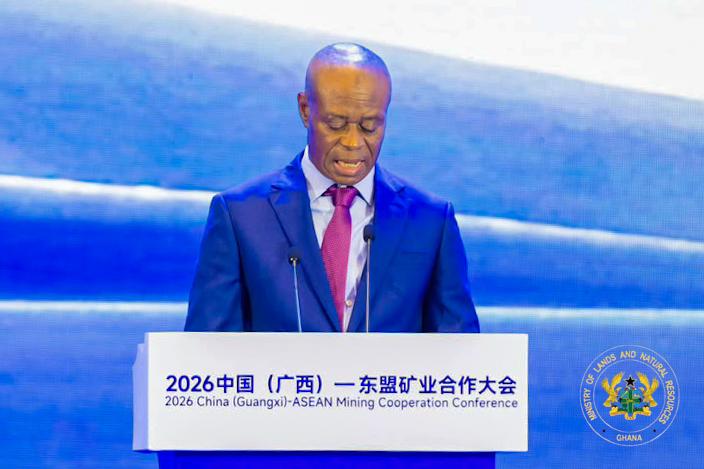
Ghana's Finance Minister Dr Cassiel Ato Forson
In 2013, President John Mahama appointed Cassiel Ato Forson as Deputy Minister for Finance—a decision that was initially met with skepticism due to his relatively modest academic background.
Akaneweo Kabiru Abdul reflects on Forson’s journey to becoming Ghana’s Finance Minister, highlighting a key leadership lesson: true leadership is about spotting potential, nurturing talent, and giving responsibility to those willing to grow.
Below is the full article:
I have pondered over this issue for some time now and have finally decided to put it out, not as a partisan defence of any individual, but as a leadership lesson for all of us. The purpose is simple: to learn, to unlearn, and to relearn what leadership, opportunity, and political development truly mean in practice.
In 2013, when President John Mahama appointed Cassiel Ato Baah Forson as Deputy Minister for Finance, the decision did not attract universal applause. In fact, within political, bureaucratic, and even parliamentary circles, the appointment was greeted with quiet skepticism and, in some cases, open ridicule.
At the time, Ato Forson’s highest educational qualification was a Bachelor of Science in Accounting from London South Bank University.
This detail is important, not to diminish his competence, but to properly situate the leadership choice President Mahama made. The Ministry of Finance is arguably one of the most technically demanding institutions in government.
It is traditionally populated by seasoned economists, career technocrats, and political actors with long academic resumes, many holding master’s degrees and PhDs in economics, finance, and public policy. Within the NDC itself, there were figures with far more intimidating academic and professional credentials who could easily have been considered.
Yet, President Mahama chose to look beyond credentials alone.
This decision reflects a deeper understanding of leadership: that potential, discipline, and capacity for growth are sometimes more important than paper qualifications at a given moment.
Leadership, in its truest sense, is not merely about appointing those who look perfect on paper today, but about investing in people who can grow into greater responsibility tomorrow.
I have been reliably informed by individuals who were at the Ministry of Finance around 2013 that Ato Forson was not initially taken seriously by many. Some bureaucrats questioned his suitability for the role.
Even among his fellow Members of Parliament, there were murmurs of doubt. Behind closed doors, jokes were made about his educational background. He was described by some as less educated, unfit for the role, and lacking the professional depth required to function effectively as a Deputy Finance Minister.
All of this skepticism was anchored largely in one fact: his highest qualification at the time was a first degree.
But history has a way of humbling arrogance. What many failed to recognize then was that responsibility is itself a classroom. Exposure to high-level decision-making, policy formulation, and institutional discipline can accelerate growth faster than any academic environment, if the individual is willing to learn.
President Mahama’s appointment of Ato Forson was therefore not an act of political charity; it was a strategic investment.
By placing a relatively young and underestimated politician in such a demanding role, he created room for growth, competence-building, and long-term party strengthening.
After being given that opportunity, Ato Forson did not stagnate. He upgraded himself academically, eventually attaining a PhD. He deepened his grasp of fiscal policy and parliamentary economics.
He went on to serve the NDC as Ranking Member on Parliament’s Finance and Economic Committees, roles that require not only political loyalty but intellectual rigor and technical understanding.
In time, he rose to become Minority Leader, one of the most demanding political positions in Parliament. Today, he serves as Minister for Finance, a role that places him at the very center of Ghana’s economic management.
Like him or not, this is not a small journey.
What is even more remarkable is that Ato Forson is no longer admired only within NDC circles. Increasingly, ordinary Ghanaians across the political divide acknowledge his growth, resilience, and command of economic issues.
In current political discourse, his name is even mentioned as a potential presidential contender for the NDC heading into the 2028 elections.
There is a powerful lesson here for political parties, corporate institutions, and leadership structures across Ghana.
If you wait for people to become fully accomplished before trusting them with responsibility, you will often end up chasing success rather than creating it. By that time, you are not a builder; you are merely reacting.
True leadership lies in spotting talent early, nurturing it patiently, and defending it courageously when it is unpopular.
Do not wait for young people to succeed before you begin to value them. If you do, you will be clutching at straws, trying to associate with achievements you had no hand in building.
Never mock a young person who is still finding their way. Life is a process, not an event.
The person you dismiss today may be the leader you applaud tomorrow. Growth is often invisible until it is undeniable. This is why I have always admired John Mahama’s leadership style in this respect.
He understands that legacy is not measured only in infrastructure, statistics, or fiscal numbers, but also in people developed, leaders shaped, and futures prepared.
The Dr. Cassiel Ato Forson story is not only about him. It is a case study in visionary leadership, and it is a lesson both major political parties in Ghana must take seriously if they are truly committed to renewal, sustainability, and building human resources.
By Akaneweo Kabiru Abdul