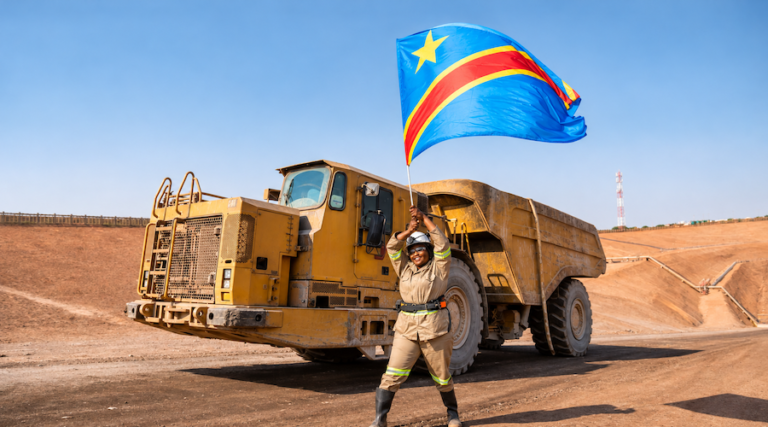
Founded in 2006, Women in Mining is an advocacy group that promotes the employment, retention, and progress of women in the mining industry. The organisation aims to be an advocate for women in the mining sector, informing industry participants and decision-makers of the challenges and opportunities women are finding when pursuing careers in mining companies and related businesses.
Leveraging partnerships with leading mining companies and other industry participants, WIM aims to push the business case for diversity, inclusion, and the economic advancement of women in the sector. One of their key initiatives is the biennial ‘100 Global Inspirational Women in Mining’, a list that highlights the diversity of talent in mining and celebrates inspirational women and their stories across all roles and seniority.
Initiatives such as this are important with women filling less than one-fifth of leadership roles across global mining companies, according to a recently released S&P Global Market Intelligence analysis of executives and board members.
Gender diversity has increasingly been a focus for investors screening for environmental, social and governance factors, and has long been a challenge for the mining sector. Women make up just 14.9 percent of mining companies’ executive ranks, 18.1 percent of the industry’s board positions, and just 13.2 percent of the sector’s C-suite executive roles, according to analysis of company data, the S&P report says.
Data shows that while the Latin American and Caribbean regions have lower rates of women working in the top positions in the mining sector, African mining companies rank amongst the highest for women working executive positions broadly, and on company boards and at C-suite level.
Conversely, women fill only about 12.9 percent of C-suite positions in Europe, while in the US and Canada, they occupy just 11.5 percent of C-suite roles. However, they are more likely to have better representation in executive roles more broadly, and on company boards – despite 21.5 percent of mining company board members being women in the US and Canada region.
Mining Global presents 10 women leaders in the global mining industry who are shaping the way the industry moves forward, while also providing inspiration to other women about the opportunities for success in this challenging and demanding sector. All 10 women have been chosen from the 2020 edition of the ‘100 Global Inspirational Women in Mining’ list from WIM (click here).
BizClik Media Group is proud to launch its first Top 100 list campaign – focusing on influential women working in Supply Chain, FinTech and Technology sectors, and will be an annual celebration published on International Women’s Day, March 8 2021.
The list will recognise the leading roles played by women in these global industries, which have proved increasingly important during the accelerated digital transformation caused by Covid-19. Input your nominations via the Top 100 Women landing page.
1. Hilde Merete Aasheim
Hilde Merete Aasheim became President and CEO of Hydro – the world’s largest integrated aluminium business – in May 2019. Prior to the company’s reorganisation of business areas in March 2009, Aasheim served as executive vice president for the Aluminium Metal business area since November 2008.
She joined Hydro in October 2005 as EVP for Leadership and Culture (human resources, health, environment, safety, and corporate social responsibility). In January 2007, she led the planning of the integration between Hydro’s oil and gas activities and Statoil. When the merger closed, she became executive vice president of staff functions and corporate services in StatoilHydro.
In her role as president and CEO of Hydro, she is focused on the company playing an important role in the global green transition, stating that while Hydro has amongst the lowest carbon footprints for aluminium production in the world, she intends to lower it further.
Aasheim adds that the mining industry needs to ‘walk the talk’ when it comes to sustainability by educating consumers and encouraging them to demand more information about the origin of the materials they are buying.

2. Eva Arias
Eva Arias is the Executive President (board and company) of Compañía Minera Poderosa in Peru.
Although coming from a family with a long history in mining, Arias is originally an architect by trade. Early in her career, she, along with two friends, opened a small – but successful – architecture and construction company. It was only in 1977 that she decided to join her family’s mining business and set about carrying on her father’s legacy.
As Executive President, Arias focuses on preparing her company, workforce and industry for the many challenges that are rapidly converging. These include social challenges around the mine’s relationship with its community, government and workers; the challenges around operational efficiency with minimal environmental impact and the highest possible safety standards; and the technology challenges highlighted by the pandemic, where ways of working and living have been transformed completely.
However, the most challenging moment of Eva Arias’ mining life has been driving Poderosa’s recovery from crisis, where within three five-year cycles, she oversaw the evolution of the company from a bankrupt entity to the most profitable company in Peru by 2019 – not just in mining, but across all sectors.

3. Zenzi Awases
Zenzi Awases is the President of the Women in Mining Association of Namibia.
A geologist with 15 years of experience exploring and mining a paleo-placer diamond deposit along the southwestern coast of Namibia, Awases entered the mining industry almost by accident, having dreamed of being a lawyer.
Since then, she has gone from strength to strength, becoming a vocal leader, mentor and advocate for gender diversity in mining. Awases was named founding president of the Women in Mining Association of Namibia (WiMAN) in April 2017, and in November 2019, was elected to the Board of the Association of Women in Mining Africa (AWIMA), as the representative for Southern Africa.

4. Serpil Demirel
Metallurgical engineer Serpil Demirel first began her career in the mining industry in sales, and gradually moved up the corporate ladder into leadership roles.
The Esan CEO is known for her focus on developing company culture and shaping that culture to meet the changing needs of both the company and the broader business environment.
Since her appointment as CEO, Demirel has focused on preparing the company for the future – profitable growth, sustainability, digital transformation, research and development and innovation are particularly high on her agenda.
Furthermore, she also is keen to ensure that women feel welcome at Esan and has tailored recruitment and workplace policies in support of her ambitions to turn the company into a diverse, forward-looking entity. As a result, Esan currently has the highest percentage of female employees across the entire Turkish mining industry.
5. Aida Diop Ndiaye
A geologist by training, Aida Diop Ndiaye is the President of Women in Mining Senegal and an activist who pushes for social progress through action.
Since 2012, she has worked to promote women’s leadership, inclusion, and participation in mineral resource governance. She has actively been involved in science and technology education for girls, and a defender of women’s rights, as well as minority populations.
Ndiaye is a founding member of Women in Mining Senegal and is also responsible for the portfolio of external relations and communications committee of Women in Mining of West Africa (WIMOWA).
She has ten years’ experience in the extractive sector (mining, oil and gas) which has allowed her to acquire skills ranging from exploration, to the governance of extractive industries through the management and development of mining projects.

6. Florence Drummond
Florence Drummond is the Co-founder and CEO of Indigenous Women in Mining and Resources Australia, a network created with her sister Jessica, to showcase Aboriginal and Torres Strait Islander women in the mining sector.
A Dauareb Wuthathi woman, Drummond is focused on working with the mining industry to create sustainable opportunities for Aboriginal and Torres Strait Islander people in Australia’s mining sector. Having joined the industry as a mine operator, Drummond aims to create a platform for voice and visibility for Indigenous women in Australia’s mining sector and globally.
She believes that relations with host communities and indigenous people are foundational to the industry’s future, and she hopes to use her perspective, experience, and position to advance that cause.

7. Gay Huey Evans
As Chairman of London Metal Exchange, Gay Huey Evans has led a major technology infrastructure rebuild and steered LME’s diversity and inclusion agenda and sustainability initiatives.
She also sits on a number of boards, is a Trustee of the Beacon Collaborative and Wellbeing of Women, serves on Chatham House’s 20th Century Committee, while she is also a member of the US Council on Foreign Relations. She serves on the boards of Standard Chartered, ConocoPhillips, IHS Markit and HM Treasury.
Over the course of a 30-year career, Evans has worked within the finance and commodity industry as both an established market practitioner and regulator, giving her deep expertise across commerce, risk, governance, policy, and regulation in capital markets.
In 2016, she was awarded an OBE for services to the financial service industry and diversity.

8. Natalia Kaybalina
Natalia Kaybalina manages the Taseevskoye mine in Siberia, one of the largest gold mines in the world. Born in Eastern Kazakhstan, Kaybalina moved to Russia in 2009, working initially in the Trans-Baikal Territory before moving to Moscow.
Kaybalina oversees the Taseevskoye deposit, which includes two adjacent sites – the Baley tailings project and the Sredniy Golgotay deposit. The predominantly underground mining operation is staffed almost entirely by a male team of about one and a half thousand persons.
In addition to being a surveyor by training, Kaybalina is also a sociologist, having completed a masters programme at Transbaikal State University’s School of Sociology.

9. Amanda Lacaze
Although Amanda Lacaze has had a diverse and successful career in marketing and telecoms, she is perhaps best known for leading the remarkable turnaround of Lynas Corporation, bringing the company back from a 99 percent drop in its share price.
Lynas is an integrated source of rare earth, being the only producer of scale of separated rare earths outside of China, and the second largest in the world. The company’s rare earths deposit in Mt Weld, Western Australia is one of the highest-grade rare earth mines in the world; and Lynas also operates the world’s largest single rare earths processing plant in Malaysia.
The company’s success is testament to the work Lacaze has put in since stepping in as CEO six years ago. The turnaround isn’t just limited to the balance sheet, with the company’s female workforce growing from 51 to 120 – mainly in operational roles, while there is a strong focus on retaining and promoting qualified women into positions of leadership.

10. Bonnie Liu
Bonnie Liu has worked in the commodities market since 2002 and joined GF Future HK from Hong Kong Exchanges and Clearing.
GF Futures operates as a futures brokerage company, serving customers in Hong Kong. Shortly after stepping into the role of CEO, Liu convinced management to diversify their business into bulks and other types of energy products within the sector. Driving the project, Liu oversaw everything from designing the business model and forecasting financials, through to building the team and finding the customers.
After three years of hard work, GF Futures has become the biggest iron ore house in the Chinese market and was rewarded by the SGX as the best performing Chinese house (iron ore) for 2019 and 2020.
By Dominic Ellis