Labram Musah
Vision for Accelerated Sustainable Development Ghana (VAST Ghana) has warned that industry interference could undermine efforts to introduce healthier food policies in Ghana, calling for stronger media scrutiny and evidence-based measures to protect public health.
The organisation said lobbying, misleading narratives, sponsorships and attempts to influence policy discussions were among the tactics that could weaken public health interventions, particularly proposals for front-of-pack warning labels and restrictions on the marketing of unhealthy foods.
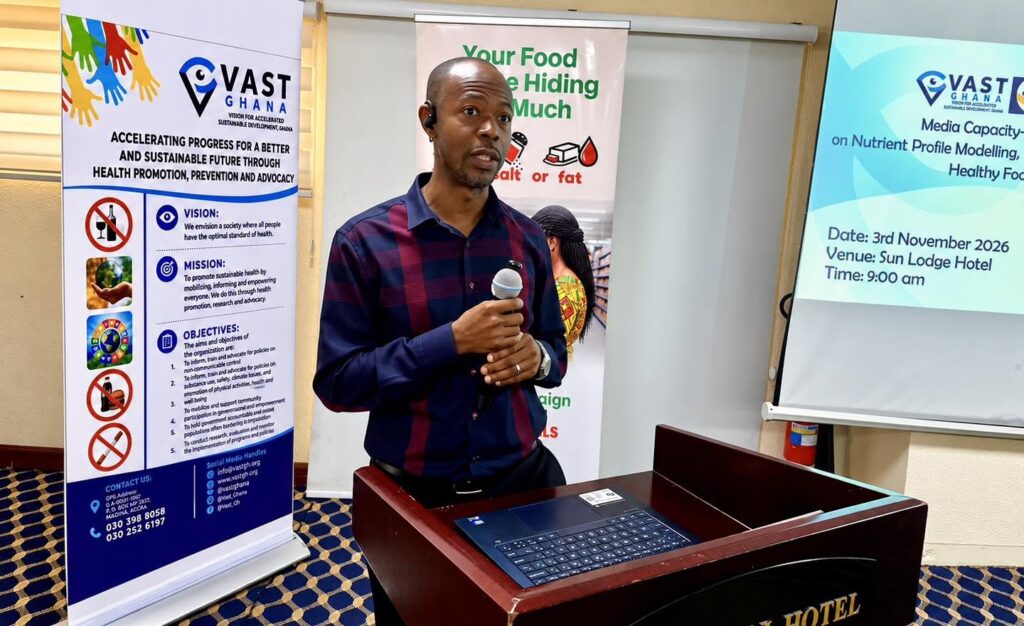
VAST Ghana Executive Director Labram Musah raised the concerns at a media capacity-strengthening workshop on nutrient profile modelling, front-of-pack warning labelling and food policy advocacy in Ghana on Tuesday, November 3, 2026.
He urged journalists to report accurately on food policy and scrutinise efforts that could compromise evidence-informed decision-making, stressing the media’s role in translating complex policy issues into information the public can understand.
The workshop was organised by VAST Ghana in collaboration with SEND GHANA and the Ghana Academy of Nutrition and Dietetics (GAND) to strengthen journalists’ understanding of proposed food policy measures and their implications for public health.
VAST Ghana is advocating a comprehensive policy framework combining a Nutrient Profile Model (NPM), mandatory front-of-pack warning labelling, restrictions on food marketing, public food procurement standards and fiscal measures.
A Nutrient Profile Model provides a scientific basis for classifying foods according to their nutritional composition, while front-of-pack warning labels are intended to help consumers identify products high in nutrients of concern and make informed choices.
Godfred Tweneboah, Policy and Research Manager at VAST Ghana, presented on the need for effective nutrient profiling and front-of-pack warning labelling. He highlighted international approaches to healthy food policies and the importance of drawing lessons from countries that have implemented such measures.

The push comes amid concerns about the growing availability, affordability and marketing of sugar-sweetened beverages and processed and ultra-processed products high in sugar, salt, non-sugar sweeteners and saturated fats. VAST Ghana has linked these trends to diet-related non-communicable diseases, including obesity, diabetes, hypertension and cardiovascular diseases.
The organisation said Ghana had made progress towards developing a policy framework, but key proposals were still awaiting review.
A Nutrient Profiling System developed under the Healthier Diet for Healthy Lives project, led by Professor Amos Laar of the School of Public Health, is currently with the Ministry of Health, pending recommendations from the Minister.

Four policy areas—front-of-pack warning labelling, marketing restrictions, public procurement and fiscal measures—have also been drafted and are awaiting review. The Ministry of Health is reviewing front-of-pack warning labelling through a technical working group.
The proposals have not yet been presented as fully adopted policies, making the ongoing review process a key stage in Ghana’s efforts to strengthen its food policy framework.
VAST Ghana said sustained media engagement would be essential to keep the proposals in the public domain, improve public understanding and ensure that decisions are guided by evidence and public health considerations.
The organisation acknowledged the support of SEND GHANA, GAND, the Global Health Advocacy Incubator, the Ministry of Health, the Food and Drugs Authority and development partners.