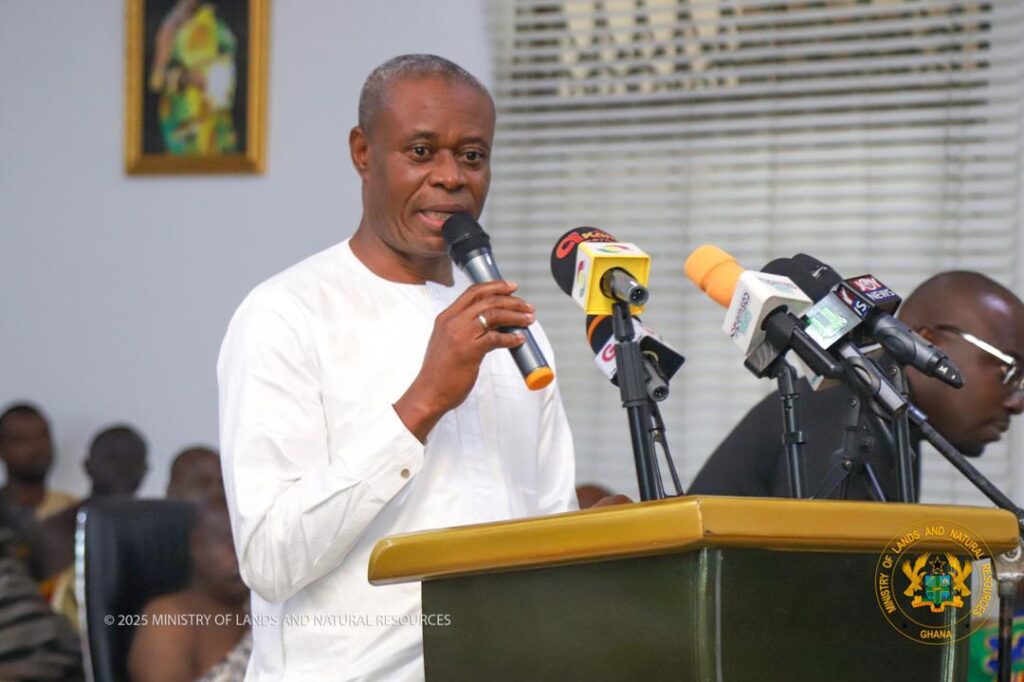
Yusif Sulemana,
The Deputy Minister for Lands and Natural Resources, Yusif Sulemana, has underscored the significance of the Ashanti Region as the epicenter of Ghana’s mineral wealth—particularly gold—which has long served as a cornerstone of livelihoods, economic growth, and historical heritage.
Addressing the Ashanti Regional House of Chiefs on July 18, 2025, . Yusif emphasized that under the esteemed leadership of President John Dramani Mahama, the government remains resolute in its commitment to rectify historical imbalances and secure a more prosperous future for all Ghanaians.
“We firmly believe, Nananom, that no mineral right—whether for small-scale, medium-scale, or large-scale mining—should be granted without the full involvement and consultation of traditional authorities,” he stated.
The Deputy Minister revealed that the endorsement of traditional authorities will become a critical requirement in the licensing process, ensuring that mining activities align with the needs, values, and aspirations of local communities.
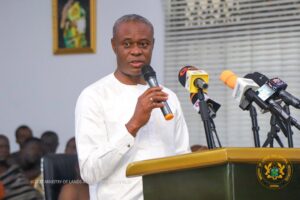
He announced the introduction of a Cooperative Mining Scheme, an innovative initiative that will enable local cooperatives, under the guidance of traditional leaders, to own and manage mining ventures in a structured and sustainable manner.
Yusif also commended the visionary leadership of Otumfuo Osei Tutu II, acknowledging his tireless efforts in promoting responsible mining practices and land preservation. From his interventions in addressing the challenges of illegal mining to his advocacy for sustainable development, Otumfuo has consistently demonstrated that progress must never come at the expense of Ghana’s heritage.
He emphasized that the current review presents a timely opportunity to formalize and further leverage traditional leadership. He called on the chiefs to help ensure that mining activities prioritize the interests of Ghanaians, rather than solely benefiting multinational corporations, and to help protect lands and water bodies from environmental degradation while supporting cooperative and local miners in establishing lawful and profitable enterprises that contribute meaningfully to national development.
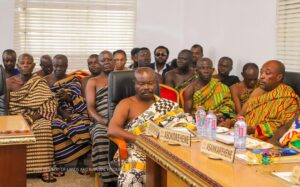
According to the Deputy Minister, the success of this policy initiative hinges on the wisdom and collaborative partnership of traditional authorities. He invited their guidance on how best to integrate traditional oversight into the licensing process, strengthen community participation in the Cooperative Mining Scheme, and ensure that miners remain accountable to both the people and the land, fostering a culture of transparency, responsibility, and environmental stewardship.
The Asantehene, Otumfuo Osei Tutu II, in his remarks, advised that Ghana must move beyond a narrow focus on royalties when assessing the value of its mineral resources, particularly gold. He noted that while royalties play a role in resource governance, they represent only a fraction of the potential wealth embedded in the country’s natural endowments. He stressed that true national development lies in harnessing the full value chain of mineral exploitation.
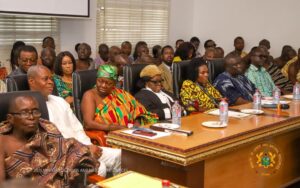
Otumfuo emphasized that Ghana, as a leading gold producer in Africa, must insist on meaningful local participation in mining operations, value addition, and infrastructure development in mining communities. He called for stronger regulatory frameworks to ensure that multinational companies do not repatriate the bulk of their profits without making impactful investments in Ghana. He urged the Ministry of Lands and Natural Resources, the Minerals Commission, and traditional leaders to collaborate on policies that promote value addition and equitable distribution of mining benefits.
He further charged the Minerals Commission to fulfill its mandate by helping to stop the devastation of forests and water bodies caused by mining. He called on the Commission to step up its supervisory and monitoring functions to ensure compliance with standards and curb recklessness in the sector.
The CEO of the Minerals Commission, Mr. Martin Ayisi, provided insight into proposed amendments to the Minerals and Mining Act, 2006 (Act 703). He explained that the amendments aim to address current weaknesses in the legal framework and improve the management of the mining sector.
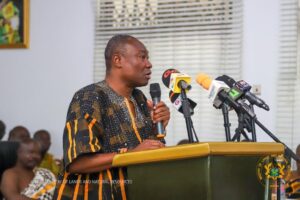
Key focus areas include tackling illegal mining, enhancing royalty collection, regulating foreign involvement in small-scale mining, and strengthening environmental and social protections. Mr. Ayisi noted that the objective is to establish a resilient, transparent, and sustainable mining sector in Ghana, aligned with global best practices and committed to responsible resource stewardship.
Mr. Benjamin Aryee, former CEO of the Minerals Commission and current advisor to the Minister, also spoke at the gathering.
He presented a comprehensive review of the 2014 Mining Policy, offering valuable insights to inform the dialogue. His contributions added important context and technical depth to the ongoing policy discussions, reinforcing the importance of evidence-based decision-making in Ghana’s mineral resource governance.