The Ghana National Gas Company (Ghana Gas) recorded a GH¢246.25 million net profit in 2025, more than double the GH¢118.16 million recorded in 2024, according to the 2025 State Ownership Report by the State Interests and Governance Authority (SIGA).
The 108.4% increase in net profit came despite the company recording an operating loss of GH¢559.06 million during the year.
SIGA said Ghana Gas’ operating revenue declined by 10.87%, from GH¢6.56 billion in 2024 to GH¢5.85 billion in 2025. The decline was attributed to lower tariffs and the appreciation of the cedi against the US dollar.
The fall in revenue pushed the company’s cost recovery ratio down from 107.75% in 2024 to 91.26% in 2025, meaning operating revenue was insufficient to fully cover operating costs.
Its operating profit margin consequently deteriorated from 14.22% to negative 9.56%.
However, Ghana Gas’ finance costs fell sharply from GH¢779.63 million to GH¢98.37 million, largely due to the cedi’s appreciation against the dollar, which reduced exchange losses on borrowings.
This helped offset the operating loss and contributed to the improvement in net profit.
Assets and liabilities
Ghana Gas’ total assets declined by 21.0%, from GH¢21.68 billion in 2024 to GH¢17.12 billion in 2025.
SIGA attributed the decline largely to a reduction in trade receivables, which fell from GH¢16.08 billion to GH¢11.23 billion.
The company’s total equity, however, increased from GH¢4.04 billion to GH¢4.28 billion, while total debt and liabilities declined from GH¢17.64 billion to GH¢12.83 billion.
Interest-bearing liabilities also fell from GH¢3.42 billion to GH¢2.49 billion.
The debt-to-asset ratio remained relatively stable at 0.15, while the equity multiplier improved from 5.37 times to 3.99 times, indicating lower financial leverage.
Liquidity concerns
Despite the improvement in profitability, SIGA identified weaknesses in Ghana Gas’ liquidity and cash-flow performance.
The current ratio edged down from 1.05:1 to 1.04:1, while operating cash flow fell from GH¢447.61 million to GH¢104.14 million.
The ratio of operating cash flow to revenue also declined from 0.07 to 0.02, indicating weaker conversion of revenue into operating cash.
Short-term debt coverage dropped from 2.82% to 0.90%, while interest coverage moved from positive 1.20 times to negative 5.68 times, reflecting the impact of the operating loss.
Ghana Gas had GH¢9.55 billion in trade and other payables, GH¢558.31 million in tax obligations and GH¢148.15 million in employee benefit obligations. It also had GH¢2.49 billion in on-lending liabilities.
Operational investments
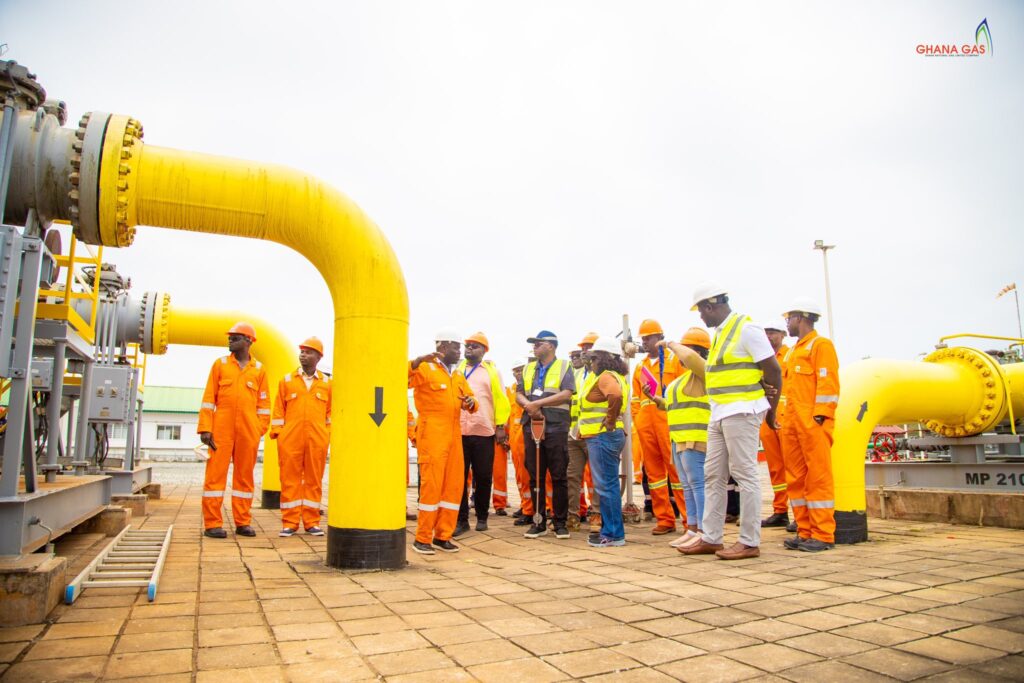
According to the SIGA report, Ghana Gas acquired AKSA Energy Limited’s four-kilometre, 12-inch high-pressure natural gas pipeline in Tema in 2025 to enhance operational flexibility and meet growing market demand.
The company also signed agreements with Tetracore Ghana Limited and CIMPOR, as well as a construction and tie-in agreement with Continental Blue Investment Limited for a four-kilometre, eight-inch gas pipeline to transport lean gas for gypsum board production.
Ghana Gas also invested 21,443 man-hours in health and safety training during the year. The company recorded one lost-time injury in 2025, compared with four in 2024.
For climate-related initiatives, the report listed tree planting and nursery establishment at the Ankasa Conservation Area, perimeter and right-of-way tree planting, and the quantification and monitoring of fugitive greenhouse gas emissions.
Ghana Gas is 100% state-owned and operates under the Ministry of Energy.