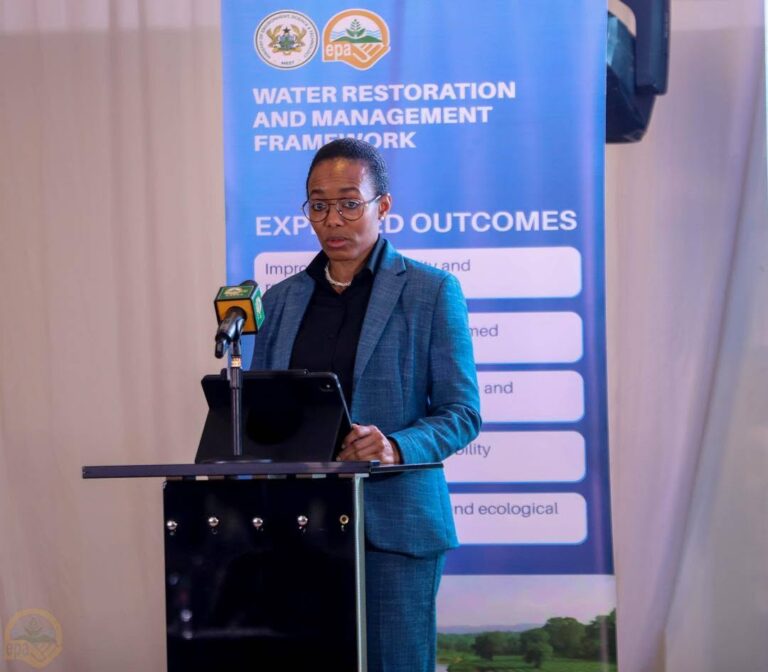
Michael Edem Akafia, President of the Ghana Chamber of Mines
Ghana’s mining sector witnessed a historic milestone in 2024, with gold production reaching a record 4.8 million ounces, a 19.3% year-on-year increase from 4.0 million ounces in 2023. This landmark achievement was announced by Michael Edem Akafia, Esq., President of the Ghana Chamber of Mines, during his address at the Chamber’s 97th Annual General Meeting in Accra.
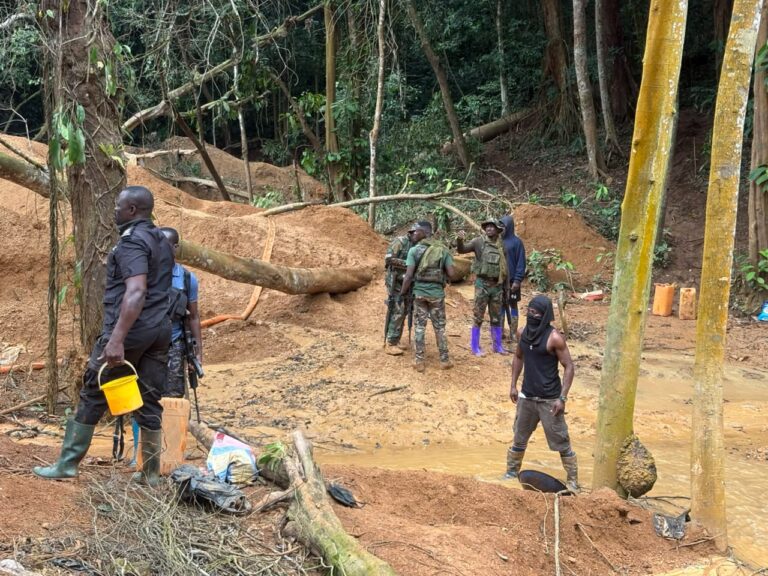
Delivering his first AGM address as Chamber President, Mr. Akafia attributed the surge primarily to the exceptional performance of the small-scale gold mining sector, which increased its attributable output by 70.1%, from 1.1 million ounces in 2023 to 1.9 million ounces in 2024. This growth propelled the sector’s share of national gold production from 27.7% to 39.4%, significantly narrowing the gap with large-scale producers, whose contribution dropped from 72.3% to 60.6%.
“This is the second-highest output level ever recorded by the small-scale sector since its formalisation,” Mr. Akafia said. “The sector’s impressive growth not only boosted national output but also affirmed the impact of recent supportive policy measures and favourable gold price dynamics.”
In contrast, large-scale gold production remained flat at 2.9 million ounces, with many operators grappling with operational inefficiencies and aging infrastructure. Production setbacks, particularly the suspension of Future Global Resources’ Bogoso Mine due to liquidity challenges, weighed down the sector’s performance. The government’s revocation of the Bogoso Prestea Mine license further impacted output.
Despite these setbacks, there were bright spots among Chamber members. Newmont’s Ahafo South Mine and Golden Star’s Wassa Mine recorded output gains, while Akrokeri-Homase Mine and Akroma Gold Limited also posted year-on-year growth, thanks to infrastructure upgrades and operational enhancements. Meanwhile, new entrant Gan He Mining Resources commenced commercial production in 2024.
Chamber member companies contributed 59.4% of national gold output and generated US$7.1 billion in mineral revenue, a 19.8% increase from 2023. However, the aggregate output from non-Chamber affiliated large-scale mines declined by 8.3%, reducing their share of national production to just 1.2%.
Beyond gold, Ghana’s mineral sector also posted strong performances in other commodities. Manganese output surged by 66.9%, bauxite by 76.5%, and diamond exports rose by 63.9%, underscoring a broad-based rebound in mineral production.
On the exploration front, Ghana increased its exploration budget by 6.4%, from US$99.7 million in 2023 to US$106.1 million in 2024, bucking the continental trend. “Exploration is the lifeblood of mining,” Akafia emphasized, noting that Ghana was among a few African countries to boost exploration spending in the face of a 1.3% global decline.
Outlook for 2025: Mixed Prospects
Looking ahead, the Chamber forecasts gold output to range between 4.4 and 5.1 million ounces in 2025. Production is expected to receive a boost from Newmont’s Ahafo North and Shandong’s Namdini Mines. However, declining output from Perseus’ Edikan Mine, Gold Fields’ Damang and Tarkwa Mines, and Zijin’s Akyem Mine may temper gains.
Manganese and bauxite production are projected to rise to 8 million tonnes and 2 million tonnes respectively, while diamond output could climb to 400,000 carats.
However, the outlook for the small-scale gold sector remains uncertain due to the government’s ongoing restructuring of the Precious Minerals Marketing Company (PMMC) into the Ghana Gold Board (GoldBod). With the new entity assuming greater responsibility for local gold pricing, production in this price-sensitive sub-sector may be significantly affected.
“Even marginal pricing changes under the new regime could lead to notable shifts in small-scale production,” Akafia warned, though he expressed cautious optimism. Under stable conditions, small-scale gold output is projected to range between 1.5 and 2.0 million ounces in 2025.
In regional comparisons, Mr. Akafia noted South Africa’s continued decline in gold production—down 5.9% in 2024—while Mali posted an 11% increase, driven by improved performance at Allied Gold’s Sadiola Mine.
Mr. Akafia concluded his address with a call for sustained investment in exploration and a balanced regulatory environment that supports both large-scale and small-scale mining players.
“As a country, we must remain resolute in creating an enabling environment for all players to thrive,” he said. “Our continued leadership in Africa’s mining sector depends on it.”