Researching for a new book, I have been in Ghana for the past two weeks, interviewing faith leaders about what religious organisations can do to promote environmental sustainability.
Both Christian and Muslim leaders point to Ghana’s small-scale gold mining sector, popularly known as galamsey, as a key cause of the country’s environmental crisis.
Ghana’s small-scale gold mining sector has transitioned from a localised, artisanal livelihood into a structural crisis involving governance, national security and ecological survival.
Galamsey illustrates the profound limits of state capacity when confronted with the dual pressures of globalised capital and entrenched domestic patronage.
Although manifested on the ground as an ecological disaster, galamsey is also an abject failure of regulatory authority, undermined by electoral calculations and institutional co-option.
Small-scale mining in the past
Traditionally, small-scale mining provided a vital economic safety net for rural youth lacking formal employment.
However, the contemporary manifestation of galamsey is quite different. It is characterised by heavy mechanisation, the introduction of foreign capital and the widespread use of hazardous chemicals such as mercury and cyanide.
This technological escalation has transformed what was once a more manageable environmental footprint into an existential threat.
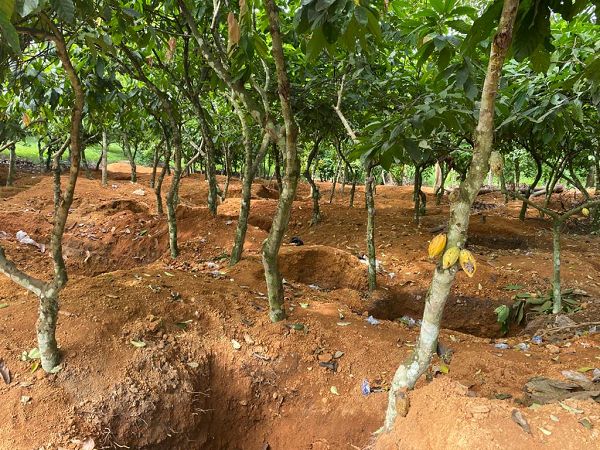
Rivers that have sustained communities for generations, such as the Pra, Ankobra and Birim, are now toxic, silt-laden channels. Forest reserves are being systematically degraded, threatening biodiversity and long-term agricultural sustainability, particularly in the cocoa sector, which remains a cornerstone of Ghana’s macroeconomy.
Structural governance issues
From a governance perspective, the persistence of illegal mining exposes a glaring paradox in Ghana’s democracy.
Ghana is frequently—and quite rightly—celebrated as a beacon of stable constitutional democracy in West Africa, with regular transitions of power and a robust civil society.
Yet the state’s inability—or unwillingness—to enforce environmental laws against galamsey reveals a severe deficit in structural governance.
This disconnect can be explained by the political dynamics of Ghana’s two-party dominance, in which the two leading parties, the National Democratic Congress and the New Patriotic Party, compete fiercely for electoral support, particularly in resource-rich rural swing constituencies.
In these closely contested districts, enforcing the law poses a serious challenge.
When a government attempts a proactive crackdown, deploying military task forces to destroy excavators or arrest miners, it risks triggering a localised electoral backlash.
During election campaigns, opposition parties have historically capitalised on such resentment, sometimes promising a more permissive approach to mining if elected.
Consequently, both parties are trapped in an electoral prisoner’s dilemma: neither can afford to enforce the law fully without risking a significant loss of rural votes. The environment becomes the ultimate casualty of Ghana’s political partisanship.
Beyond electoral politics
Beyond electoral politics, galamsey is sustained by deeply entrenched networks of political patronage.
The capital required to purchase excavators, secure industrial pumps and allegedly bribe local officials does not originate from impoverished rural youth. It comes from powerful, often invisible, syndicates that bridge the gap between formal state structures and the informal economy.
These networks involve a complex web of actors, including local chiefs, influential businesspeople, security personnel and high-ranking political figures.
By distributing economic benefits to local elites, these syndicates build a formidable barrier to state intervention.
When state institutions attempt to intervene, their efforts are frequently neutralised by “orders from above”, which undermine regulatory bodies such as the Minerals Commission and the Environmental Protection Agency. As a result, the rule of law is effectively replaced by a system of informal, transactional governance.
This governance vacuum has galvanised civil society organisations (CSOs) campaigning against galamsey, including the University Teachers Association of Ghana, the Trade Union Congress, environmental NGOs and some religious bodies, notably the leadership of the Catholic Church.
These groups are calling for an absolute ban on mining and prospecting in forest reserves, stricter judicial penalties for illegal miners and the complete depoliticisation of the regulatory framework.
However, civil society interventions face significant structural barriers.
While urban-based elites and academic unions view galamsey as an unmitigated environmental disaster, local mining communities often see it through the lens of economic survival. In the absence of viable alternative livelihoods provided by the state, a heavy-handed ban risks criminalising thousands of citizens and exacerbating rural poverty.
This creates a volatile socio-political divide between an urban intelligentsia demanding ecological preservation and rural communities dependent on resource extraction.
Galamsey and Ghana’s environmental future
The galamsey crisis confirms that environmental degradation is inextricably linked to the structural realities of political power.
The state’s response to illegal mining has so far relied on episodic, militarised crackdowns that address the symptoms of the crisis rather than its systemic causes.
The consequences include alleged human rights abuses and localised violence, while elite patronage networks remain largely unscathed.
There is broad agreement that Ghana must do more to avert ecological collapse.
Faith leaders argue that Ghanaians must practise “creation care”: God has entrusted humanity with environmental stewardship, not ecological destruction.
Many Ghanaians would agree that it is wrong to destroy the environment shared by all for the short-term enrichment of a few. Many would also agree with their faith leaders that more must be done to combat galamsey.
However, until alternative sources of reasonably lucrative employment become available to rural youth, galamsey will continue to provide livelihoods for millions of Ghanaians, despite the concerns raised by faith leaders.
By Prof. Jeffrey Haynes
The writer is Emeritus Professor of Politics at London Metropolitan University, UK.