As a father of two, with others I care for, I am clear that my spending is not aimed at generating profit for myself. Rather, it is to ensure that my dependants have a social, economic, and spiritual life that enables them to become impactful and productive members of society.
As an entrepreneur, however, my expenditure is aimed at delivering responsible profits for myself and my shareholders, alongside a constructive economic impact that often requires patience to realise.
In both cases, I prioritise value creation and development—focusing on short-term sustainability as a foundation for medium- to long-term gains. Though different, these objectives are similar in that they are purpose-driven.
The recent debate surrounding the reported US$214 million loss by the Bank of Ghana (BoG) under its Gold-for-Reserves Programme—also known as the Domestic Gold Purchase Programme (DGPP)—has been fascinating. It has been passionate, emotional, and technical all at once. Some insist it is a loss; others say it is not. So, what exactly is a loss?
In economics, where strict science meets human behaviour, few things are absolute. While “1 + 1” equals two everywhere, the outcome of economic policy is never uniform. Even the IMF and World Bank cannot guarantee perfect results. There is always an X-factor.
1.0 LOSS OR NO LOSS?
From an accounting perspective, a loss is simply Total Revenue minus Total Cost. If costs exceed revenue, a loss is recorded. Finance introduces nuance by accounting for opportunity cost—the return forgone by not investing elsewhere.
For example, if you invest GHS100 and earn GHS110 in a year, accounting records a GHS10 profit. But if treasury bills were yielding 15%, you could have earned GHS15. Economically, you have incurred a loss of GHS5. As economists like to say, na wahala.
Economic policy operates differently. Expenditure on education, for instance, is not treated as a loss but as an investment in future productivity. This is why policy analysis focuses on costs and benefits, not profits and losses.
In simple terms: an accounting or financial loss is not necessarily an economic loss. Not all losses are losses, and not all profits are benefits.
2.0 THE GOLDBOD
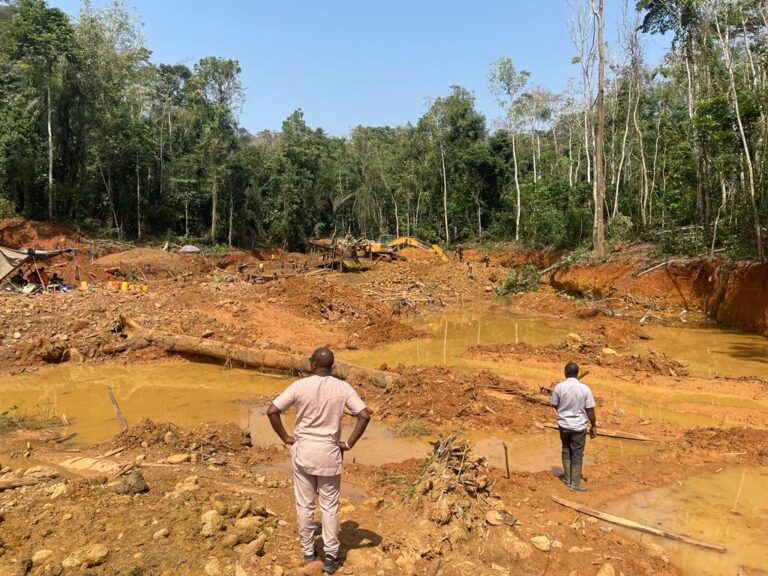
Before GOLDBOD’s creation, Ghana was not fully benefiting from its gold output. UN COMTRADE data show that the UAE imported US$7.1 billion worth of gold from Ghana in 2022–2023, while Ghana officially reported only US$4.8 billion. Roughly one-third of Ghana’s gold production was being smuggled.
Meanwhile, Ghana relied heavily on borrowing to build reserves. Gold exports—despite strong production—did not significantly strengthen reserves due to offshore retention of export receipts by foreign mining firms. This contributed to debt distress, culminating in the Domestic Debt Exchange Programme and IMF-supported reforms.
GOLDBOD was therefore established with clear objectives:
-
Generate foreign exchange
-
Support gold reserve accumulation by the BoG
-
Centralise and regulate gold trading and exports
Its policy rationale is to reduce smuggling, optimise forex inflows, build reserves, and capture national value from gold.
3.0 HAVE THE OBJECTIVES BEEN MET?
In 2025—its first year—GOLDBOD oversaw an increase in official ASM gold exports from 63.6 metric tonnes in 2024 to 101 metric tonnes by December 23, 2025. This was driven not by a production surge but by a drastic reduction in smuggling.
The IMF reports a US$214 million trading loss by the BoG. This is an accounting loss. But from a policy perspective, it reflects the deliberate decision to buy gold at world market prices to disincentivise smuggling and break foreign dominance in gold trading.
Much of the “loss” also stems from foreign exchange differentials between BoG interbank rates and open market rates. GOLDBOD paid bonuses to miners to bridge this gap and keep gold within the formal system—effectively a policy cost to secure national benefit.
4.0 DGPP: LOSS OR NO LOSS?
The IMF acknowledges that the DGPP enabled Ghana to meet its reserve accumulation targets ahead of schedule. Gross reserves rose from US$8.98bn in 2024 to US$11.12bn by October 2025, with projections of US$13bn by year-end.
This, combined with higher gold prices and reduced smuggling, strengthened the cedi, reduced inflation, cut debt service costs, lowered import bills, and improved real incomes.
Key outcomes include:
-
32.5% year-on-year cedi appreciation
-
Over GHS12.6bn in direct fiscal savings
-
Inflation reduced from 24% to 6.3%
-
Over GHS60bn in import-related savings
5.0 THE IMF AND THE ‘LOSS’
The IMF’s flagging of the US$214m is legitimate—it reflects policy cost scrutiny. However, Ghana’s rapid currency appreciation runs counter to typical IMF adjustment models, which usually anticipate initial depreciation. Ghana’s experience shows that homegrown policies, aligned with local realities, can produce unconventional but positive outcomes.
6.0 CONCLUSION
The US$214m incurred under the DGPP is a policy cost, not an economic loss. The benefits far outweigh the cost. However, policy must now evolve to reduce FX differentials, eliminate leakages, and sustain gains through economic diversification. Economic policy must be judged holistically—or we risk knowing the price of everything and the value of nothing.