Nearly ten months after the Minister for Lands and Natural Resources, Emmanuel Armah-Kofi Buah, announced that the government would soon declare Ghana’s forest reserves and water bodies as national security zones to combat illegal mining, environmentalists and civil society organisations are asking a critical question: Has the policy been fully implemented, and are these ecologically sensitive areas receiving the protection that was promised?
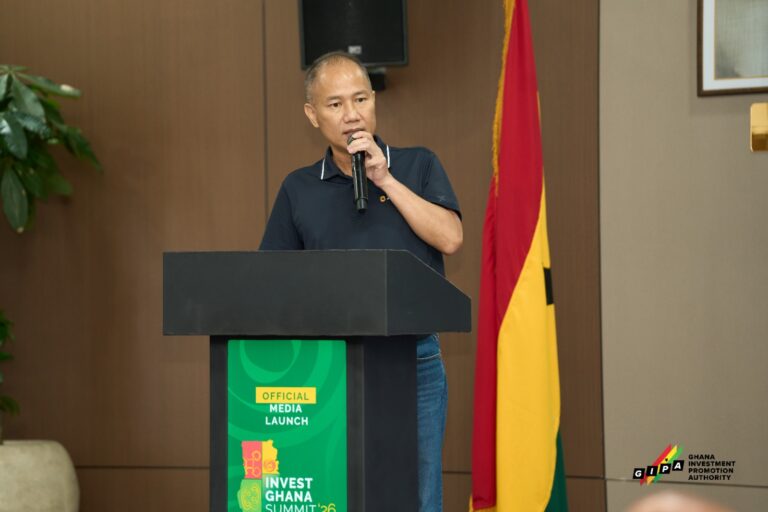
The question has gained renewed attention following the Minister’s presentation at the Government Accountability Series on July 15, 2026, where he reaffirmed government’s commitment to protecting Ghana’s forests and rivers and declared that “the era of impunity is over.”
The concern is particularly acute in the case of the Atewa Range Forest Reserve, one of Ghana’s most ecologically important forests and the source of the Birim, Densu and Ayensu rivers. The three rivers provide water to more than five million Ghanaians, including a significant proportion of residents in Accra, making the protection of the forest critical to the country’s long-term water security.

In September 2025, speaking on GTV, Mr. Buah announced that the government would soon designate all forest reserves and water bodies as national security zones as part of intensified efforts to combat illegal mining.
Listen to the Minister in the attached audio clip below:
“The President has made it very clear that we are moving all the water bodies and the forest reserves into national security zones, which means they will become no-go areas. We are now preparing to deploy permanent military to these areas,” the Minister said.
He explained that the permanent deployment of security personnel would serve as a deterrent to illegal miners whose activities continue to threaten Ghana’s forests and water resources.
At the Government Accountability Series on July 15, 2026, Mr. Buah reiterated government’s determination to win the fight against illegal mining, describing it as “the defining environmental battle of our generation.”
“Our rivers are not for sale. Our forests are not expendable. Our mineral wealth is a sacred national inheritance that we have a duty to protect,” he said.
The Minister further declared that “the era of impunity is over,” stressing that government would continue to pursue individuals, financiers and criminal syndicates responsible for environmental destruction.
“Government will continue to pursue every individual, every financier, and every criminal syndicate that profits from the destruction of our environment. The law will be applied without fear or favour,” he stated.
However, despite those assurances, reports of illegal mining activities in forest reserves and along river bodies continue to emerge. The Atewa Range Forest Reserve, despite its ecological significance, remains under pressure from illegal mining.
The renewed scrutiny also comes as the Coalition Against Galamsey Ghana (CAGG), in its response to the Minister’s Accountability Series presentation, warned that Atewa remains under severe pressure from illegal mining despite ongoing enforcement efforts. The coalition said that while government has made progress in clearing illegal mining “red zones,” many forest reserves continue to face persistent encroachment.
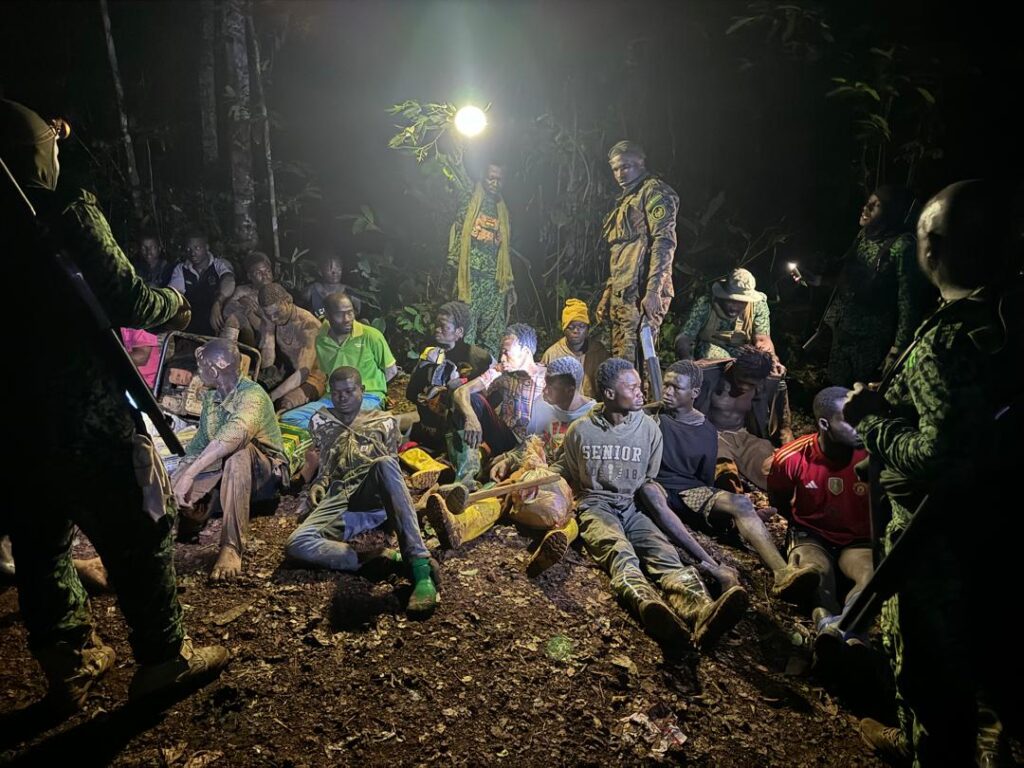
To be fair, authorities have not been inactive. In April 2026, Rapid Response Teams (RRT) carried out a dawn operation at Sagyimase within the Atewa Range Forest Reserve, leading to the arrest of 24 suspected illegal miners. The operation, involving 30 personnel drawn from six teams across the country, also resulted in the destruction of 16 water pumping machines and 52 makeshift structures believed to have been used by illegal miners. Two additional water pumps were seized as exhibits.
The operation demonstrated the state’s continued resolve to confront illegal mining in protected forest areas. Yet it also highlighted a persistent challenge: despite government’s plans to designate forests and rivers as national security zones and strengthen enforcement, illegal miners continue to gain access to sensitive ecological areas such as Atewa.
More recently, in June 2026, personnel of the Forestry Commission from the Anyinam District arrested six suspected illegal miners during an anti-galamsey operation in the Bomaa enclave of the Atewa Forest Reserve. According to Forestry Commission officials and environmental group A Rocha Ghana, officers seized two metal detector machines and two pump-action machines during the operation.
However, while transporting the suspects to the police station, the enforcement team was reportedly ambushed by individuals believed to be associates of the illegal miners. One Forestry Commission guard sustained injuries during the attack, and three of the arrested suspects were freed. The remaining three suspects were subsequently handed over to the Kwabeng Police Station for further investigations.
The Coalition Against Galamsey Ghana says incidents such as those occurring in Atewa demonstrate that removing illegal miners from forest reserves is only part of the challenge. According to the coalition, a cleared “red zone” is not the same as a secure forest, as illegal miners continue to return to many protected areas after enforcement operations.
In its assessment of the forestry sector, the coalition specifically identified the Atewa Range Forest Reserve as remaining under serious pressure from illegal miners. It urged government to provide the Forestry Commission with additional personnel, logistics and resources to sustain enforcement operations, accelerate the establishment of protected security camps within forest reserves and strengthen the Commission’s operational capacity.
The coalition also renewed calls on President John Dramani Mahama to fulfil an earlier commitment to upgrade the Atewa Range Forest Reserve into a National Park. It argued that granting Atewa stronger legal protection would help safeguard one of Ghana’s most important water catchments and biodiversity hotspots while creating a lasting environmental legacy for future generations.
The incident not only underscores the continued presence of illegal mining activities within the Atewa landscape but also highlights the increasingly dangerous conditions under which frontline officers are operating. It also raises important questions about the implementation of government’s proposed national security zone policy and the extent to which enhanced protection measures have been put in place.
This raises legitimate questions. What progress has been made toward implementing government’s plan to declare forest reserves and water bodies as national security zones? Has the proposed deployment of permanent military personnel commenced? What monitoring and enforcement mechanisms have been established beyond periodic arrests and raids? And how much progress has been made in securing vulnerable forests such as Atewa?
The public would also benefit from a comprehensive update on the implementation of the proposed security zone policy. Such an update could include progress on the deployment of security personnel, the number of incursions recorded into protected forests, the status of reclaimed forest reserves, the utilisation of budgetary allocations and the outcomes of enforcement operations. Transparency on these indicators would help Ghanaians assess whether the policy is achieving its intended objectives.
The questions become even more pertinent given the resources allocated to the anti-galamsey campaign.
In the 2026 Budget Statement, Finance Minister Dr. Cassiel Ato Forson announced an allocation of GH¢150 million to the National Anti-Illegal Mining Operations Secretariat (NAIMOS) to intensify the fight against illegal mining and forest degradation. According to the Finance Minister, the funds were intended to support enforcement, intelligence gathering and monitoring operations aimed at protecting Ghana’s forests, rivers and farmlands.
Beyond enforcement, Mr. Buah said government is also investing in forest conservation and ecotourism through the Forestry Commission. He announced that work is underway on a 120-seat picnic area and a 10-unit chalet at the Shai Hills Resource Reserve, while a 20-room tourist accommodation facility and restaurant at Mole National Park are also expected to be completed.
The Minister also described as historic Cabinet’s June 24, 2026 decision to revoke Executive Instrument (E.I.) 144, as amended by E.I. 234, thereby restoring the Achimota Forest to its original status as a Forest Reserve and preserving it as an ecological safety zone for Accra and its surrounding communities.
Public updates on the disbursement and utilisation of the GH¢150 million allocation remain limited, making it difficult for citizens to assess whether resources are matching the scale of the challenge and whether the investment is delivering the desired outcomes.
To be fair, NAIMOS has conducted several operations in recent months, leading to arrests, seizures of mining equipment and the disruption of illegal mining activities in some areas. However, many of these interventions appear largely reactive, taking place after environmental damage has already occurred.
Civil society organisations, including A Rocha Ghana and the Coalition Against Galamsey Ghana, maintain that while arrests and equipment seizures demonstrate some progress, sustained protection of forests such as Atewa will require continuous security deployment, stronger institutional support for the Forestry Commission, greater transparency over anti-galamsey funding and tougher enforcement against those financing illegal mining.
The Minister told the Accountability Series that government would “not retreat, not relent and not surrender” in the fight against illegal mining, expressing confidence that Ghana would reclaim its rivers, restore its forests and secure its natural resources for future generations.
Whether that vision is being realised remains at the heart of the debate. While government points to enforcement operations, policy reforms and conservation initiatives as evidence of progress, environmental groups argue that the continued illegal mining activities in forests such as Atewa demonstrate that much more remains to be done.
As pressure on Atewa and other forest reserves continues, the challenge for government is to translate its commitments into measurable improvements on the ground. For many conservationists, securing Atewa through stronger legal safeguards—including its long-proposed designation as a National Park—would represent one of the most significant steps toward protecting one of Ghana’s most critical water catchments and biodiversity hotspots for generations to come.