Ghana stands on the brink of a transformative phase in its petroleum sector, with the Petroleum Hub Development Company (PHDC) planning an ambitious industrial project designed to add value to the country’s oil resources.
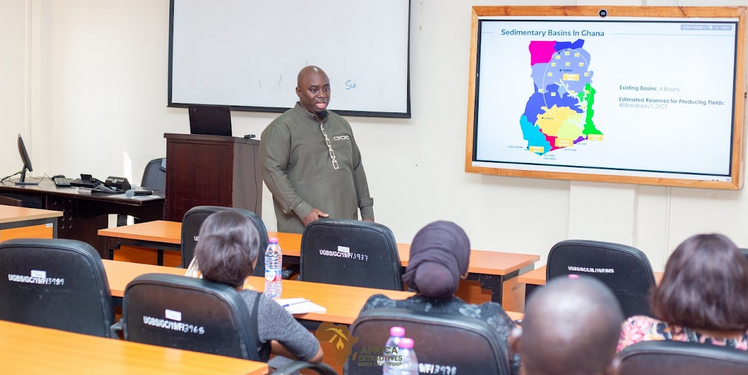
Speaking at the Africa Media Extractives Fellowship in Accra on Wednesday, 26 November, Director of Operations and Technical at the Petroleum Hub Development Corporation (PHDC), Kwabena Owusu-Abrokwa highlighted the scale and potential impact of the project.
The initiative will include three refineries with a combined capacity of 900,000 barrels per day, five petrochemical plants, storage facilities capable of holding 10 million cubic meters, and at least two deep-water jetties.
According to Owusu-Abrokwa, the project is designed not only to refine oil but to stimulate the broader industrial ecosystem, creating jobs, fostering local skills, and supporting the country’s long-term energy transition.
Owusu-Abrokwa emphasised that oil and gas have historically been central to industrial development globally. “Every developed country has leveraged its energy resources as a backbone for growth. Coal, oil, plastics — all of these form the foundation for industrialisation,” he said. He argued that Ghana now has an opportunity to harness its petroleum resources to build a strong industrial base.
The PHDC executive noted that the project incorporates a mix of energy solutions, including solar power and waste-to-energy initiatives, to supply ancillary operations. “We are designing with the energy transition in mind,” he said. “This is about building a modern, sustainable industrial hub.”
Addressing concerns about reliance on foreign investment, Owusu-Abrokwa urged Ghana to consider domestic financing of such projects using oil revenue. He argued that over the years, the country has become dependent on foreign capital, which has slowed the development of new oil fields and limited domestic participation in the sector. “If we invest part of our oil revenue into these projects, we could accelerate industrialisation and increase national ownership,” he said.
The PHDC official highlighted that Ghana’s petroleum products underpin much of modern life — from clothing to household goods — and stressed that adding local value through refining and petrochemical production is critical. “Almost everything around us has an oil base. This is our foundation, and we must use it to build our industrial future,” Owusu-Abrokwa said.
He concluded by calling for bold action and domestic investment to ensure that Ghana’s petroleum wealth translates into long-term economic growth, job creation, and industrial capacity.