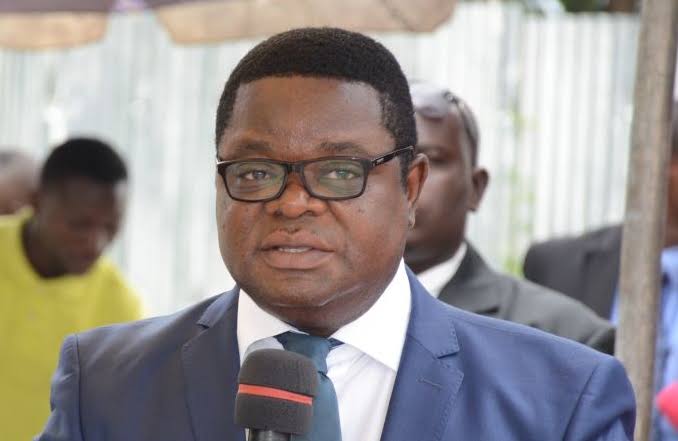
Isaac Dwamena Esq (2nd from left) and Samuel Bekoe (1st from right)
Experts from the Public Interest and Accountability Committee (PIAC) have emphasized the need for a more strategic and results-driven approach in utilizing Ghana’s petroleum revenues to improve the country’s healthcare sector.
Samuel Bekoe, a member of PIAC, highlighted the importance of allocating petroleum revenues toward the completion of major health infrastructure projects rather than using it as counterpart funding. According to him, such an approach would prevent projects from stalling due to financial shortfalls.
He stressed the need for a clear framework to track the impact of petroleum-funded projects such as the Agenda 111 initiative. Bekoe called for measurable targets to assess the effectiveness of investments in healthcare infrastructure.
“For instance, if petroleum revenues are allocated to Agenda 111, we must define its objectives—whether it’s to increase healthcare access or improve service delivery. What is the current access level, and how will this investment improve it? We need clear benchmarks to measure progress and ensure accountability,” Bekoe explained.
“We should encourage the government to allocate petroleum revenues directly to completing projects rather than using it as partner funding. This ensures that if other funds fail, projects do not stall and continue to deliver benefits to Ghanaians,” Bekoe added.
On his part, Isaac Dwamena, PIAC’s Coordinator, urged the government to comply with the Petroleum Revenue Management Act (PRMA), which mandates an assessment of priority areas every three years. However, he noted that such evaluations are often missing, making it difficult to determine whether funds are being effectively utilized.
“The PRMA requires periodic assessments of priority areas like health, but we rarely see documents from the government detailing whether targets have been met. Without such reviews, it’s difficult to decide whether to continue funding a sector or shift priorities,” he added.
Both experts agreed that petroleum revenues should be utilized in a structured and transparent manner, ensuring that projects are not only completed but also deliver the intended benefits to Ghanaians.
This discussion was part of Time with PIAC, a platform dedicated to promoting accountability and transparency in the management of Ghana’s petroleum resources.