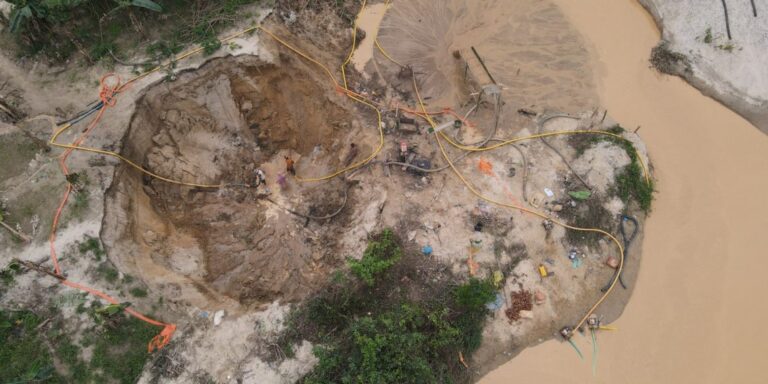
A new study has found that military interventions targeting informal small-scale mining in northern Ghana have triggered significant socioeconomic and health-related disruptions in affected communities.
The study, published in The Extractive Industries and Society, examined the experiences of 74 informal miners across three rural communities in northern Ghana.
Researchers Kenneth Joseph Bansah, Issah Baddianaah and Emmanuel Nyaaba used semi-structured interviews and thematic analysis to assess the effects of military enforcement on mining-dependent communities.
The findings identified six major interconnected impacts: loss of livelihoods and increased indebtedness, reduced agricultural activity, fatalities and injuries, long-term psychological distress, family separation and household disintegration, and forced migration.
According to the study, the destruction of mining equipment during military operations undermines not only mining activities but also agricultural production and other livelihood activities that depend on mining income.
The researchers also found that repeated military raids generated fear and psychological strain, while the disruption of income sources contributed to debt accumulation and household instability.
Women and other people whose livelihoods depend indirectly on mining were also found to experience economic exclusion as a result of enforcement actions.
The researchers developed a Militarized Livelihood Disruption Framework (MLDF) to explain how military enforcement can trigger interconnected economic, social and health disruptions that increase vulnerability and contribute to cycles of displacement.
The study argues that treating informal mining solely as an environmental or legal issue overlooks the broader livelihood systems on which rural communities depend.
It recommends integrated and livelihood-sensitive approaches that combine environmental protection and enforcement with economic alternatives, recovery mechanisms, psychosocial support and pathways towards sustainable livelihoods.
The researchers further identify poverty, limited employment opportunities and rural underdevelopment as structural factors that need to be addressed in efforts to tackle informal mining.
Below is a copy of the research:
1-s2.0-S2214790X26001802-main by Fred Dzakpata