Miners
Senegal’s extractive industries could provide 8–9 percent of state revenues until 2030. But efforts by companies or individuals to dodge their tax responsibilities could reduce the contribution the sector makes.
Evidence suggests, for example, that multinational corporations shift around 35 percent of their profits to tax havens.
This problem affects the extractive industries and is particularly acute in developing countries such as Senegal.
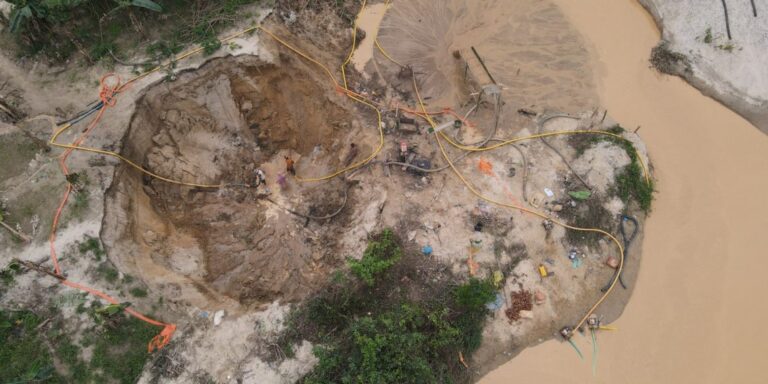
Flows of funds linked to corruption, illegal mining, money laundering and avoiding regulations can also undermine resource-rich countries’ ability to benefit from their extractive industries.
Senegal appears to be significantly affected by these problems. Various estimates have suggested that the country could be losing 1-12 percent of its tax revenues each year, due to various types of the illicit financial flows mentioned above, with a significant share linked to the mining sector.
The wide range of estimates underscores the need for better data.
This report includes estimates of Senegal’s tax revenue losses due to trade misinvoicing (false customs declarations): losses of USD57 million to US$153 million (1–3 percent of tax revenues) depending on the method used, with a substantial share linked to the mining sector.
If reclaimed, these amounts could be large enough to double the size of Senegal’s cash transfer support program for households.
How do such losses occur? Though Senegal’s tax system is strong in many ways and officials have high capacity for overseeing the taxes of mining companies, there are still weaknesses. For instance, Senegal could strengthen coordination and information sharing between the tax department and the Ministry of Mines.
The country may also need to acquire more capacity to audit oil and gas companies for tax purposes, including through hiring geologists. In addition, Senegal may be losing tax revenues due to trade misinvoicing.
Gold exports to the United Arab Emirates appear to be particularly affected, although by themselves they would account for a minority of the tax revenue losses that Senegal experiences. According to the country’s national statistical agency, another major source of tax losses in the extractive industries is the under-declaration of the value of minerals, where these are processed in Senegal by the mining company (or a part of the same group).
A further potential area of vulnerability is subcontractors in the extractive industries. When subcontractors based abroad supply extractive companies in Senegal from the same multinational group, the subcontractors can be used to inflate costs.
Such subcontractors capture a substantial share of gross revenues from the extractive sector and can benefit from tax treaties that allow them to avoid taxes.
The Senegalese authorities should also remain vigilant to the risks of tax treaty abuse, given that several multinational companies operating in the extractive industries benefit from tax treaties that Senegal has signed with other countries (either directly, or indirectly via bilateral investment treaties).
This report identifies a number of policies to address these problems. For example, it recommends that Senegal’s government and parliamentarians strengthen the country’s tax authority (Direction Générale des Impôts et des Domaines) with more personnel, and remain vigilant to the risks posed by tax treaties and bilateral investment treaties.
To the Direction Générale des Impôts et des Domaines, the report recommends that officials improve co-ordination between the tax authority and the Ministry of Mines, and information sharing with customs authorities of Senegal’s trading partners, to help prevent trade misinvoicing.