Ghana’s inflation rate climbed more than expected in October, raising pressure on the central bank to continue increasing borrowing costs that are already at a more than five-year high.
Annual inflation quickened to 40.4% in Africa’s second-largest gold producer, compared with 37.2% a month prior, Government Statistician Samuel Kobina Annim told reporters Wednesday in the capital, Accra. That exceeded the median expectation of 39.5% of three economists in a Bloomberg survey. The agency last month changed its reference year to 2021 from 2018.
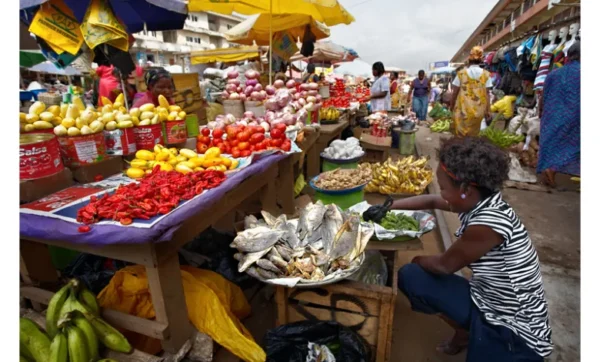
The cedi has slumped 57% since January, the most among 148 currencies tracked by Bloomberg, while international commodity prices have surged, driving up the cost of imported goods. Headline inflation is now quadruple the top of the central bank’s target band of 6% to 10%.
Food-price growth quickened to 43.7% from 37.8% in September, and non-food inflation accelerated to 37.8% from 36.8%. Prices rose 2.7% in the month.
The Bank of Ghana’s monetary policy committee will decide whether to lift its key interest rate for a fifth time this year on Nov. 28. It has raised rates by 10 percentage points since March.
The Ghanaian cedi weakened 0.8% against the dollar to 14.5000 at 10:47 a.m. in the capital, Accra. The yield on Ghana’s dollar bonds maturing in 2032 rose 20 basis points to 28.8%.
The cedi’s renewed slide has been partly driven by uncertainty over Finance Minister Ken Ofori-Atta’s future, after the opposition introduced a motion in parliament to remove him because of the nation’s economic crisis. The minister is leading negotiations with the International Monetary Fund to secure a $3 billion economic-support package and is due to present the nation’s 2023 budget later this month.
Bloomberg