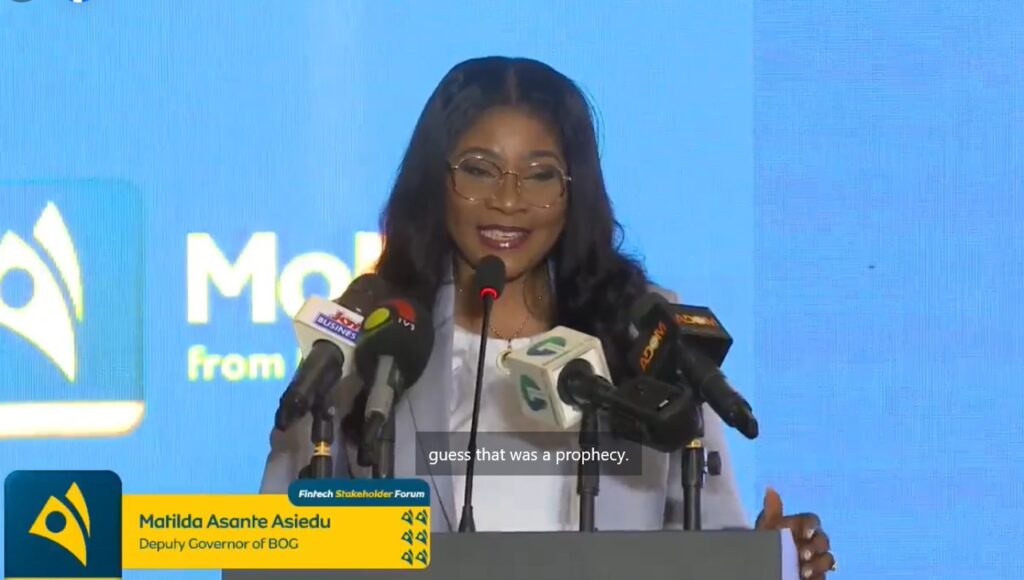
The Second Deputy Governor of the Bank of Ghana (BoG), Matilda Asante Asiedu, has announced that the central bank will begin receiving applications for digital credit licensing from November 3, 2025, as part of new regulatory reforms to promote responsible and inclusive digital finance in Ghana.
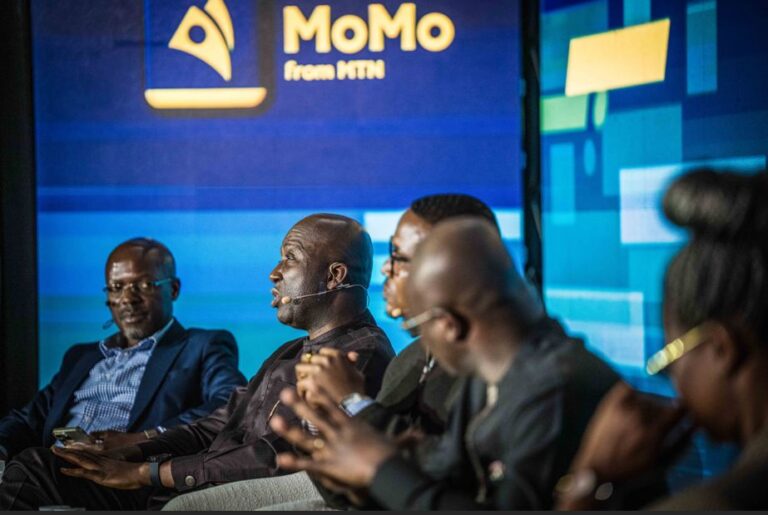
Speaking at the Fintech Stakeholder Forum held in Accra on Wednesday, October 15, 2025, under the theme “Harnessing Ghana’s Fintech Potential: Regulatory Frameworks for Digital Credit and Digital Assets,” Mrs. Asante Asiedu commended MobileMoney Limited (MTN MoMo) for convening an important platform for dialogue on the future of fintech regulation in Ghana.
She said the BoG’s new digital credit directive, which came into effect last month, enforces ethical lending practices, clear disclosures, and governance standards to safeguard consumers and the integrity of the financial system.
“Our recent directive on digital credit service provision establishes clear rules for governance and consumer protection. From November 3, applications will now be received for digital credit licensing,” she stated.
Mrs. Asante Asiedu also revealed that the Virtual Asset Service Providers Bill, being developed in collaboration with the Securities and Exchange Commission and the Financial Intelligence Centre, is at its final drafting stage. The bill aims to create a transparent and risk-aware framework for digital asset transactions in Ghana.
She highlighted that Africa’s fintech evolution has moved from the margins to the mainstream of economic policy, noting that digital finance now serves as “the new infrastructure for opportunity.”
“Across Africa, mobile money usage has grown from 12 percent of adults a few years ago to more than half today, transacting over $850 billion annually. This transformation has redefined how people save, borrow, trade, and invest,” she said.
The Deputy Governor cautioned, however, that the rapid rise of fintech also exposes markets to new risks such as cyber threats, predatory lending, and unlicensed virtual asset schemes. She revealed that joint operations by the Bank of Ghana, the Cyber Security Authority, and Interpol had recently uncovered over 400 illegal lending operators, stressing the need for ethical innovation.
“As transactions move online, exposures widen. Integrity and innovation must advance together,” she warned.
Mrs. Asante Asiedu reaffirmed BoG’s commitment to making Ghana a regional hub for responsible digital finance, where innovation is balanced with strong regulatory oversight, financial literacy, and consumer protection.
“Our goal is to build a financial system that is modern yet moral, dynamic yet disciplined — one that truly serves the people it was intended for,” she concluded.