Some key events coming up in 2025 have game-changing potential for our planet. Here, two of the BBC’s environment journalists analyse what they could mean for the climate and nature.
As countries unveil new climate targets, Donald Trump enters the White House for a second term and a potentially game-changing ruling for future climate lawsuits unfolds – 2025 is set to be a big year for climate and nature.
Speaking in his New Year’s message in late December, secretary-general of the United Nations António Guterres said that the world is witnessing “climate breakdown – in real time”.
“We must exit this road to ruin. In 2025, countries must put the world on a safer path by dramatically slashing emissions and supporting the transition to a renewable future,” he said, stressing that “it is essential – and it is possible”.
Here are seven of the big moments in 2025 that could shift the dial on climate and nature.
January: Trump’s second presidency begins
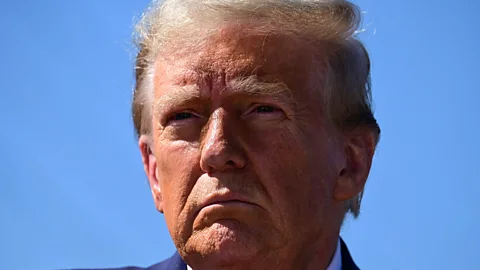
This year will see the start of the second Trump presidency, which many experts warn will be a major setback for climate action. Trump has already said he plans to withdraw the US from the Paris Agreement – the legally binding UN treaty on climate change – and may even pull the country out of the UN Framework Convention on Climate Change (UNFCCC), which underpins global action to tackle climate change.
However, some experts say momentum is now on the side of the energy transition despite any actions Trump will take. “The result from this election will be seen as a major blow to global climate action,” Christiana Figueres, the former UN climate chief, told the BBC in November. “But it cannot and will not halt the changes under way to decarbonise the economy and meet the goals of the Paris Agreement.”
Global economics have changed significantly since Trump was last president, says Stientje van Veldhoven, regional director for Europe at the World Resources Institute (WRI), a non-profit based in Washington DC, and former environment minister of the Netherlands. “Whereas eight years ago, the economics worked against [the clean energy transition], now they very much start to work in favour of it. That is one thing that has really changed.”
China, which is projected to account for almost 60% of the world’s renewable energy capacity installed between 2024 and 2030, “does not depend on the US for the energy transition”, adds van Veldhoven.
In the US, clean energy is also booming due to investment driven by the Inflation Reduction Act (IRA), passed under Joe Biden’s administration. The majority of this money has been invested in areas that elected Republicans, meaning Trump may face opposition from within his own party if he tries to curb the growth of renewables, says van Veldhoven. “The IRA is bringing jobs to the US and many of these are in Republican states. The support for [this investment] is much more widely spread than just the Democrats.”
In the absence of climate leadership in the White House, US mayors and states are also likely to step up to strengthen climate resilience in their areas and lower the energy bills of their residents. This is already happening – Vermont, for example, is restoring floodplains, while Texas is building storm-resilient homes.
February: New national climate goals arrive
Another key date in the UN climate calendar is February 2025. Under the Paris Agreement framework, this is the deadline for countries to submit new climate action plans, known as Nationally Determined Contributions (NDCs).
These plans are only updated every five years and outline how countries intend to decarbonise their economies and protect their citizens from climate impacts over the next 10 years. The new plans form part of the Paris Agreement’s so-called “ratchet mechanism” which aimed to increase individual countries’ climate ambition over time towards the collective goals.
I think this year we will see the integration of climate and nature and the recognition of how much they are interlinked – Stientje van Veldhoven
“This round of NDCs will have to show much bigger commitments than the previous [plans],” says van Veldhoven. When countries submitted their first NDCs in 2015 as part of the Paris Agreement, “the energy transition was still very much in its infancy”, she notes. The world today is very different, with renewable energy sources growing rapidly and countries moving away from fossil fuels.
While several countries including the UK, Brazil and the US have already updated their NDCs, major emitters such as China and India have not yet submitted. However, many are likely to trickle in after the official deadline in the run-up to COP30, the UN climate summit taking place in Belém, Brazil, in November this year.
According to the UN’s Intergovernmental Panel on Climate Change (IPCC), keeping the world within the 1.5C limit requires global emissions to fall 43% by 2030 compared with 2019 levels. The previous round of NDCs in 2020 only reduced emissions by 4-10%. Current trends are going in the wrong direction: 2023 saw a global record for greenhouse gas emissions, with emissions up 1.3% on 2022 levels. (Find out more about the 1.5C global warming threshold in this article by Martha Henriques.)
February: Another chance to address the nature crisis
Talks on biodiversity are set to resume at the second instalment of the COP16 biodiversity summit, taking place this year in late February in Rome, Italy. (Read BBC News’ recap on the earlier instalment here.) The next full biodiversity summit will place in 2026. Countries are discussing how to implement the goal to protect 30% of Earth’s land and seas by 2030, which was agreed in December 2022.
“In February, governments will gather in Rome where they must agree on a global financing mechanism for biodiversity that works for all,” says Clement Metivier, senior international advocacy advisor at WWF UK. “This is essential to build confidence that [the framework] can be effectively implemented.”
Later in the year, nature is expected to be high on the agenda at COP30 in November when it takes place in Brazil, home to the a large portion of the Amazon rainforest. Deforestation in the Brazilian Amazon dropped to a nine-year low in 2024, a year after President Luiz Inácio Lula da Silva took office and pledged to end deforestation by 2030. Despite Brazil’s recent efforts, forest loss remains a major global challenge. The world loses 10 football fields of tropical primary forest every minute, according to analysis by WRI. (Scroll down to read more on COP30 below).
“For a long time, nature and climate were treated as two very separate areas of attention, but I think this year we will see the integration of those two agendas and the recognition of how much they are interlinked,” says van Veldhoven. “These things will come together, physically and conceptually, in the Amazon.”
Early 2025: Culmination of a landmark climate lawsuit
Climate lawsuits have exploded over the past few years, with everyone from governments to fossil fuel firms and airlines defending themselves in court against claims over climate-related damages or that they haven’t taken enough action on carbon emissions. (Read more about the legal battles changing the course of climate change.) There are now thousands of lawsuits globally related to climate change, many still ongoing.
An International Court of Justice advisory opinion on climate obligations of states coming this year could be a ‘game-changer’ – Vesselina Newman
“2024 already saw a slew of game-changing climate court outcomes,” says Vesselina Newman from Client Earth, an environmental law non-profit in the UK, pointing to cases in Korea, Germany, the International Tribunal for the Law of the Sea (ITLOS), and the European Court of Human Rights. “This year, we’ll be looking to see how governments act on them, and how these decisions affect other court rulings going forward – or what further litigation they inspire,” says Newman.
Joana Setzer, associate professor at the Grantham Research Institute on Climate Change and the Environment in London, says she expects 2025 to be “another pivotal year for climate lawsuits”. The number of cases will likely continue to grow in countries with historically high case counts but may also rise in places where litigation has been less common, such as China, she adds. “As diplomatic negotiations face challenges, international judicial action serves as a crucial counterbalance, rooted in evidence, accountability, and the urgent need for progress.”
A key ruling to look out for is the advisory opinion of the International Court of Justice (ICJ) on the obligations of states to address climate damages. The legal opinion was requested after a motion at the UN from Vanuatu in 2023 gained support from more than 130 countries. Vanuatu, which is made up of around 80 low-lying islands, faces peril from rising sea levels. (Read more about how small islands are confronting existential climate threat.)
Expected in early 2025, the ICJ ruling would be non-binding but could be cited in climate court cases around the world.
“Although non-binding, ICJ advisory opinions carry significant moral and legal weight,” says Setzer. “This advisory opinion has the potential to establish a global benchmark for climate accountability and reinforce the connection between human rights, sustainability, and environmental protection.”
If the ICJ does find that countries have an obligation to reduce emissions under international law, “that’s a game-changer”, says Newman. “Judges all around the world with novel climate cases before them could draw on new, concrete guidance.”
May: Satellite watch
In recent years there has been a flurry of new satellite launches to collect data on the climate as well as methane and CO2 emissions. New satellites are also helping countries crack down on forest destruction and enabling scientists to track the changing migratory routes of marine wildlife. These satellites can offer both global overviews and an unprecedented level of detail on environmental pollution and changes.
Expect to see more and more detailed data coming in the year ahead, as well as new launches. MicroCarb, for example, the first European satellite dedicated to measuring atmospheric CO2 and emissions sources, is slated for launch in May 2025. The European Space Agency (ESA)’s even more high-resolution CO2M satellite won’t launch until 2026, however.
Mid-2025: Plastic debates rumble on
In 2024, countries failed to reach an agreement on tackling plastic pollution, following over two years of negotiations. Delegates at the talks agreed to reconvene in 2025, with the next round of talks now expected in mid-2025 and a final conference, where it’s hoped a treaty will be signed, at the end of 2025, according to WWF.
The key disagreement is over whether countries should commit to curbing plastic production or focus on reducing waste by increasing plastic recycling. There was also tension on how much financial support should be given to help developing countries switch to less polluting business models, and whether the measures agreed to should be voluntary or legally binding.
Since 1950, more than eight billion tonnes of plastic have been produced globally, according to the UN, and less than 10% of this has been recycled. Plastic production has increased nearly every year since 2050, and this growth has accelerated in recent years. Plastic use globally is expected to double by 2050, with the oil industry viewing this as a key growth area. Plastic is produced from fossil fuels and the industry accounts for around 5% of global carbon emissions. Efforts to curb production would therefore also help countries meet their climate targets.

A group of 95 countries, including the UK, EU, African Group and many South American nations, are calling for a legally binding pledge to reduce plastic production levels. But oil-producing nations including Kuwait, Saudi Arabia and Russia have resisted this.
“With the next round of negotiations expected this year, countries must come prepared to deliver meaningful commitments,” says Paula Chin, senior policy adviser at WWF-UK. “The world cannot afford further delays – inaction will only deepen the plastic pollution crisis and its devastating impacts. Governments must seize this opportunity to set clear, enforceable rules to end plastic pollution and protect both people and planet for future generations.”
Plastics are not the only polluting substance which could face action in 2025. The EU is expected to make a decision on a ban on PFAS, often known as “forever chemicals”, in 2025. This month, California and New York became the first US states to implement bans on the sale of clothing that contains PFAS.
November: The 10th climate talks since the Paris Agreement
As 2025 draws towards a close, November will see perhaps the biggest climate event of the year: COP30. The annual UN climate conference will be held in Belém, Brazil. This will be the 30th COP (the first took place in Berlin, Germany in 1995) and marks 10 years since countries signed the landmark Paris Agreement, pledging to try to prevent global temperatures rising by more than 1.5C.
This year’s meeting is seen as a particularly important one. Since Lula assumed Brazil’s presidency in 2023, the country has tried to position itself as a strong actor on climate change. The country has seen a huge drop in deforestation in recent years, and has already called on others to up their game on climate (although it’s worth noting it remains the eighth largest oil producer in the world). Ana Toni, Brazil’s national secretary for climate change, called on the EU to show climate leadership, Politico reports. Toni told AFP in November that Brazil would “never shy away” from a discussion on how to put a promised fossil fuel “phasedown” into action.
BBC